Category Archives: Leadership

What I Have Learned in 40 Years of Marriage

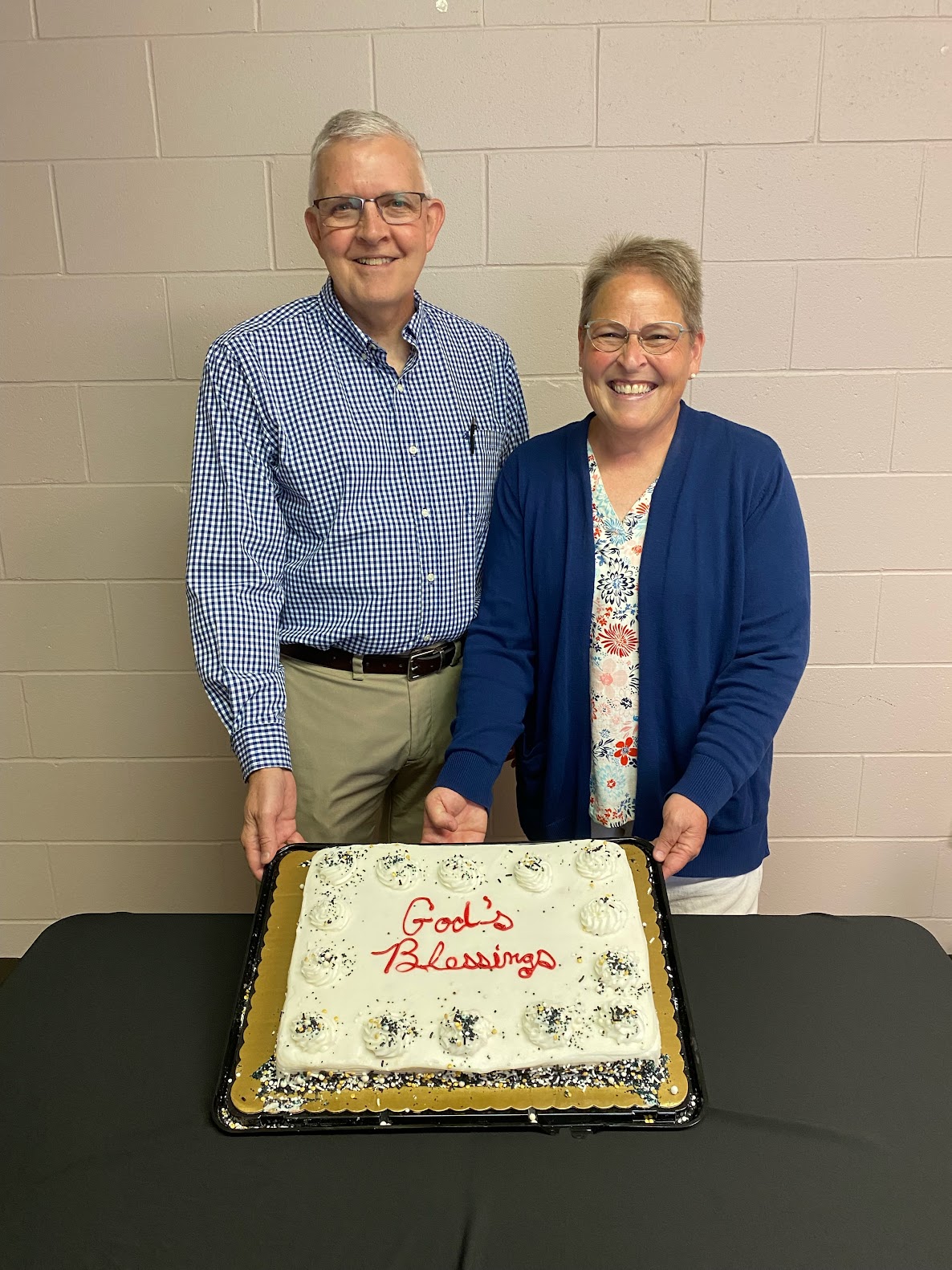
Today my wife and I have been married for 40 years!  That seems like a long time, yet it also seems that it was just last week we said, “I do”. 

Coming up to this milestone I’ve been thinking about those years, filled with so many experiences, people and places, and what I’ve learned in that time.  What I’ve learned about marriage? About my spouse? About myself? About life?

So, here’s a list of 40 thoughts that in some way partly encapsulate my learnings:

  1. People are more important than projects.  The most important person in my life is my spouse. That hasn’t changed despite children, grandchildren, friends, etc.
  2. It is not good for man (especially this man) to be alone.  I learned this one the hard way. No job is worth separation – even if the separation is planned or supposed to be temporary.
  3. Family matters way more than career and other superfluous goals.
  4. Ministry is much easier when one’s life partner also feels called.
  5. Sometimes silence speaks more than words.  This can be true both positively and negatively.
  6. That “do not let the sun go down on your anger” scripture? (Eph. 4:26) Good advice.
  7. Being married to “the queen of small talk” is a gift when one is an introvert.
  8. Teachers need about a two-week adjustment period when school is out for summer or starting back up in the fall.  Just stay out of the way, be helpful, and be understanding.
  9. Some of the things that seemed important and worrisome, can age into funny memories.
  10. As long as you share common core values, its ok to have other interests, habits and hobbies.
  11. Be flexible.
  12. Learning to say “I’m sorry” or “I was wrong” early in a relationship will avoid a lot of grief along the way.
  13. There is no greater sorrow than your child’s sorrow, no greater joy than your child’s joy.  Having a spouse with whom to share this is a blessing.
  14. Change should be expected in any relationship, especially a long tenured marriage.
  15. Being married to your best friend is always having someone in your corner.
  16. Big decisions are best made after sleeping on it.
  17. When you say “yes” to a job, you should give that job your best effort.  There’s no excuse for not working hard.
  18. When you work at something you love, it hardly seems like work.  Marriage is work, but it needn’t be toilsome.
  19. Marriage is like a book – lot’s of chapters, some more interesting than others, but each essential to the story.
  20. Communication is to a marriage what water is to a fish.
  21. It truly doesn’t help to worry about tomorrow, each day does have enough trouble of it’s own.  (Matthew 6:34)
  22. If it makes your spouse feel better to watch the breaking weather report ad nauseum, put in your headphones or go to the other room.
  23. If it makes your spouse feel better to read all the latest Boilermaker news – you’ve got a pretty great spouse!
  24. When in public your teacher spouse is identified, stopped and talked to; just realize how many lives she’s helped shape and form and be thankful!
  25. Tell your wife “I’ll be in the car” before you leave to go to the car.
  26. Don’t wait until after you turn on the water to brush your teeth before you share something important.
  27. Understand this: Cleaning is to Lori what lawn and garden work is to Dan – a happy place!
  28. Moses had Aaron; Dan had Lori.  Neither one would’ve made it in ministry without their person.
  29. A farmer once told me as we welcomed our first child: “Dan, with every child you’re going to drop another rung down the ladder.” Three kids and soon to be five grandkids later, I’m just thankful she keeps me on the ladder
  30. Cereal can be good for supper, not just breakfast.
  31. Life is better when you travel in pairs.  (Genesis 2:24; Genesis 7; Luke 10:1)
  32. In hindsight, God’s got this!
  33. Being married to someone who can close down any public building because there’s someone to talk to, you get used to it.  Builds patience.
  34. Always make friends with the custodian.  These are important people who work hard and deserve respect. 
  35. The sun will come out tomorrow.  Might be behind the clouds, or only seen in a “sun break”, but it’s out there somewhere.
  36. The “love language” thing?  It’s valid. We don’t all give or receive love in the same way.  It’s worth learning your spouses love language.
  37. In the end “it’s just money”.  Generosity wears better than an attitude of scarcity.
  38. You can never imagine where and what a lifetime together will reveal, be thankful you get to explore it a day at a time.
  39. On their 40th Anniversary I asked my father-in-law when he and my mother-in-law had been most happy.  He said, in his dry wit, five minutes here, five minutes there.  But you know?  Those five minutes add up – be happy!
  40. “For better or worse, richer or poorer, in sickness and in health” is a vow to be lived into and to stick with.  Easier said than done?  Not really.  Not when you love the one who’s meeting you part-way.

Happy Anniversary!

9 Comments

Filed under Christian Faith, Family, Leadership, Passageways, What I Am Learning

Passageways: When Going Forward is Hard, but Going Back Would be Disastrous

When I was a kid our family often spent weekends camping at McCormick’s Creek State Park. The park has a variety of hiking trails and other attractions, but the one I was most drawn to was Wolf Cave. According to the park’s website “Wolf Cave was formed as underground water dissolved the limestone bedrock and carved out a network of passageways. Over the years Wolf Cave became exposed by the powerful forces of erosion. The cave is now dry because the underground stream it once carried has carved lower passageways.”

While I trust this explanation of the cave’s origin, as a kid all I knew was this was a “way cool” cave that you could actually go through from one side to the other. If memory serves, the opening of the cave – which is rather broad and squat – invites you to enter on bended knee. Through travelers are quickly funneled from the breadth of that opening into a single file channel of rocky outcrops and curves. The close formed ceiling of the cave causes you to watch your head (learned that the hard way), while the mud packed floor bids creeping footfalls that are sometimes accompanied by the suction of water. All of this is enhanced by total darkness, perhaps pierced by a flashlight if you were fortunate to have planned ahead.

I’m not sure my age when I first ventured through the cave, but I doubt I was yet ten years old. I do remember keeping touch with older siblings who were both ahead and behind me, and having the sensation of wanting to turn around more than once. That, however, was not an option for more than one reason. First, there were multiple people in line behind us and crawling back against that current of strangers was a foreboding thought. Second, the humiliation of turning back without completing the mission would have forever stained my reputation and self-esteem. (Who am I kidding, I wasn’t thinking in those terms. I just didn’t want to be called a “sissy” by my family!)

So, we pressed on. The confined passageway eventually yields to a more spacious great room at the cave’s opposite end. However, to exit that room back into the great outdoors one has to crawl through a small opening – which (as luck would have it) was filled with rain water on my pilot spelunking adventure.

Continue reading

1 Comment

Filed under Leadership, Passageways, Uncategorized

Passageways

As an amateur photographer I have been drawn to images of passageways. These visual prompts can also make you reflect on the life passageways common to human experience. In this section of my blog I’m inviting you to consider both some passageways I’ve photographed, and others I will invite us to reflect on.

Leave a comment

Filed under Leadership, Passageways, Uncategorized

Goals Help Us Move Forward

Are you a goal setter? A new year is often a time when persons put some thought into what they hope to accomplish on the blank canvass of a fresh calendar. Whether engaged in with intentionality or as a passing musing while on a long drive, there is something about looking out the windshield into another year that prompts us to reflect. In doing so, we may consider what we want, need, or hope to accomplish with the gift of this next year. Setting a few goals can make a difference toward these thoughts becoming more than mere wishful thinking.

Perhaps you’ve heard about SMART goals? SMART is an acronym that can help one realistically establish direction in goal setting. SMART stands for: Specific, Measurable, Achievable, Relevant and Time-Bound. These are the kinds of goals that can propel an individual or organization forward. For example, let’s say I have a goal to get in better physical shape in 2023. Phrased in this way, the goal is admirable, but not too particular from the general “wish” of many people. If I want to improve my goal in a way that fits the SMART framework, I might edit it as follows: In 2023 I will work to lose 10 pounds by June 1, while following a heart healthy diet, exercising 45 minutes 5 days a week, averaging eight hours of sleep per night, using a health app on my smartphone for accountability. With this wording, I’ve created a specific, measurable, achievable, relevant and time-bound goal.

I promise you that there are multitudes of folks with good intentions contemplating gym memberships as the new year begins, but those with SMART goals will likely follow through on those intentions at a much higher rate than those without. So, if this is true of our behavior individually, what about congregationally? Should we, as a church, have goals? Would it help for us to be as specific and thoughtful about our ministry goals as we might be concerning our individual goals? What does a SMART church goal even look like?

We will never know if we don’t attempt to formulate one. Would such a conversation energize your leadership team? Could you, as a leader, bring up the topic and invite others to collaborate with you around it? I’m guessing almost every congregation might benefit from some goal setting in one area or another. Here are some potential general arenas of ministry that might be ripe for goals: Evangelism (introducing others to a relationship with Jesus Christ), Discipleship (helping believers grow in faith formation), Stewardship (educating and shaping disciples in their practices of giving), Missional expression (taking steps as a congregation toward greater outward expressions of ministry with the community), Fellowship (working to build relationships, provide tools for reconciliation as needed, and strengthen true expressions of covenantal community).

Any of those general ministry areas would benefit from reflection on Specific, Measurable, Achievable, Relevant, Time-bound goal setting. So why not have the conversation? Pick one or two areas of ministry that you feel led to work toward together in 2023 and begin formulating goals that are specific, measurable, achievable, relevant and time-bound. Be sure to incorporate times of prayer (collective and individual) into the process, so the goals that emerge are led of God. In this process you will unleash imagination, energize participation, and realistically set direction for the coming days, weeks and months.

1 Comment

Filed under Christian Faith, Leadership, Ministry

The Importance of Culture in a Pastoral Fit

Last week I wrote a blog post on when cultures collide. I’ve continued to think about the topic of culture, but want to address a more specific aspect as it relates to a church calling a pastoral leader. In this congregational process, which we American Baptists honor as part of our polity, culture can be a determining factor as to whether the call is productive or not.

In working alongside pastoral search committees I have often said that there are two aspects of the cultural fit which a committee, congregation, and prospective pastor must pay attention. One is what I will call the “theological cultural fit”. The second is what I call the “social cultural fit”. Let me explain.

A theologically conservative congregation does not usually want to call a pastor who is not theologically conservative. Similarly a theologically moderate church will probably not do well with a far-right theologically conservative pastor. This may seem like a given, however it’s a conversation that needs to be explored in the search process. Too often persons assume agreement on the basics of Christian doctrine and do not explore the nuances of a topic. For example, I can be a theologically conservative pastor who has a high view of Scripture, sound understanding of soteriology (salvation), traditional views of Christology, missiology and ecclesiology. And I may also affirm the role of women in leadership and ministry, as a conservative pastor or congregation. Yet if I am matched with a pastor, or church, who also espouses a conservative identification, but does not also agree with the view of women in ministry and leadership; there will be tension and strife within this match from day one.

Another arena within the theological cultural fit has to do with one’s understanding of congregational polity and leadership. As an American Baptist I affirm the autonomy of the local church, including it’s right to call whom it discerns God has led to be pastor. I also affirm that the pastor, while called to an office or role within the church, is not to function as as an autocrat but a leader among leaders, working alongside staff and lay leadership (male and female) for the good of the whole. This collaborative style of leadership is one that will not function well within a congregational system that looks to the pastor for authoritative leadership; nor will the authoritative pastoral leader function well in the midst of true congregational polity.

These are but two examples where due consideration of the theological match in the search and call process is critical, and worth more than one conversation. In a time when longer tenured pastoral calls show congregations with greater stability and health, let’s not get in such a hurry that we short-circuit the process and end up repeating it in a couple of years, leaving both a weakened clergyperson and congregation in the wake!

The other cultural fit I identified above is what I termed a “social cultural fit”. By this I mean that the pastor and congregation would do well to come from a shared social understanding or background. The most common example I have used is that a rural congregation is likely to fare better with a pastor who has some understanding of rural life, verses one who’s only life and ministry experience has been urban. The reverse of this is true as well. Of course there will be exceptions to the rule, and we never want to deny someone the capacity to grow and stretch in their appreciation of a different context. Nonetheless, more often than not when we assume the social cultural fit is not that important, in the end it usually proves to have been.

The additional caveat I would include in this post is a combination of the above “fits” as it concerns denominational affiliation. We are clearly living in a day when denominational labels and traditions are not given as much weight as they once were. Congregants choose affiliation with congregations today for a wide host of reasons, with denominational affinity being down the list, especially for younger generations. Pastoral candidates are tempted to do the same. Afterall Baptist is Baptist, right? Well, maybe not!

As a regional judicatory minster who has more than once been called on to mitigate the differences that surfaced between a long established denominational church, and it’s recently called non-denominational, or other denominational pastor; I can promise you that this “fit” is also important. Search committee, pastoral candidate, and congregation take heed. God does work in mysterious ways, but God also works among those who’s streams of spirituality and ministry are most similarly aligned.

6 Comments

Filed under Leadership, Ministry, Pastors, Uncategorized