This – this is Christmas!

‘Twas just days before the Christ child’s birth, and pilgrims were traveling. They were going home to pay taxes by order of Ceasar Augustus. Among them, enroute to Bethlehem, the town of David, were Joseph and Mary. This engaged couple was from Nazareth, making a weeklong journey to their ancestral home.  Mary was very pregnant, her baby expected any day.

The trip was difficult. Mary was uncomfortable but did not complain. Joseph was anxious, doing all he knew to accommodate Mary’s needs in a caring way. Day by day, mile by mile, step by step, they made their way.

On arrival in Bethlehem town the young couple were at first unable to find a place to lodge – which was too bad because Mary had gone into labor. When lodging was finally secured, it would be in an animal stable. Here the young woman, no older than her late teen years, gave birth to a son – the Son of God – whom she laid in a manger for his first bed.

His was a humble birth, befitting common parents of few means, who were encumbered by the demands of an occupying empire. But this baby was of God’s chosen people, in the very line of King David and Father Abraham. His birth had been foretold by prophets Isaiah and Micah. It would be celebrated in heaven and on earth as angelic choirs burst forth in song, and meek, poor shepherds came to bend their knee to the newborn king.

The details of what would have otherwise been an unrecorded birth, have become the heart-warming natal story of our Savior Jesus. It’s a story read, sung, proclaimed and treasured each year. Why?

Jesus’ birth introduced a new realm, which He called the Kingdom of God. It is a realm we pray to be fully known “on earth as it is in heaven”. His birth makes possible the reconciliation of separated people with their Creator. It will one day lead to the restoration of creation in a new heaven and new earth. This restoration will include the fullness of communion between God and humankind. All because Jesus would come to earth – come to die – to bridge the gap caused by sin, giving us a path back to God. He came as “God with us” (Emmanuel) and God for us. He is God loving us and God forgiving us.

This – this is Christmas! It’s the celebration feast of Jesus’ birth, filled with the echo of “Unto us a child is born! Unto us a Son is given. . . And His name is called Wonderful Counselor, Prince of Peace, Mighty God”, Savior, Lord, Messiah, Anointed One.

Behind all the glitz, lights and traditions of Christmas lies this story, the greatest story. The candy canes (like shepherd staffs), gift giving (in the Magi’s example), twinkle lights (for the Light of the World), carols and songs (ala the angel chorus), all point us to a night long ago in Bethlehem when “unto us” came one to be among us. It was God “pitching tent” in our very neighborhood. God in Christ – fully human and fully divine – our newborn king. Happy birthday King Jesus! Merry Christmas to all. Joy to the world!

© Daniel M. Cash 2025
Leave a comment

Filed under Christian Faith, Holy Days, Hope, Ministry

Pondering the Christmas Parade

“But the angel said to them, “Do not be afraid; for see – I am bringing you good news of great joy for all the people. . .”  (Luke 2:10 NRSV)

Our family attended the community Christmas Parade this past Saturday evening. It was a 90 plus minute procession of one fire truck, police vehicle, pickup truck, float, civic group, local business, Mack truck, Semi-Truck, pickup truck, band, church group, politician seeking office, social service organization, pickup truck after another. There were a lot of lights illuminating the vehicles and pedestrians, way too many grinches in costume, several blow up decorations (a few of them ambulatory), and Santa at the end. It was your typical small town Midwestern parade – well attended, safely conducted and enjoyed by children, families and watchers of all ages. For my money (it was free) it could have been about 30 minutes shorter and tightened up a bit – reducing big gaps between entries. But hey, it was free, and I appreciate the effort volunteers make in helping such an event happen in today’s world.  

As a people watcher I find parades kind of interesting. It’s interesting to watch those in the parade and the outlandish things they will do and wear to get attention. It’s also interesting to watch the people who are watching the parade. Children often take center stage holding their collection bags over safety barriers in hopes of candy and freebies. Parents of said children are interesting to watch as they encourage their child to “see” what’s coming next, say “thank you” when given a treat, or cover their ears if the noise of a particular exhibit is overwhelming.

I was present as a grandad and not directly responsible for anyone given that the grands parents were all present. I noted the woman who brought her chair and set up next to our party. She was prepared – chair, blanket, earmuffs, and solid winter gear. She seemed a bit disinterested at times, but I get it, how many local business’ advertising pickup trucks can one get enthused over? Yet when the high school band finally came down the street, she perked right up. She even recorded a video of their performance. “She must have a kid in the band”, I thought to myself.  This thought was further reinforced when she packed up and left soon after the band had gone by. I understood. I’ve been that band parent, sitting in the cold waiting for the band to arrive and perform.

A couple of additional observations come to mind from this parading spectacle. I was heartened to once again note the diversity that exists in our hometown. This was not a one look parade – it included people of all skin tones, as well as diversity in expression, faith profession, and persuasion. It seemed that one entry in particular was making a statement about their ethnic heritage, which I appreciated and applauded in this climate of ICE deportation threats. Not only was their performance well-rehearsed and presented, I found them to be brave. 

My other observation was that people were having a good time. I noted how many greetings were shared between parade participants and parade watchers. “Merry Christmas” rang out over and over again, as well as the aforementioned “thank you.”  Maybe I’m reading more into things than is merited, but I had the sense that people were enjoying being together in public, in celebration of a seasonal event that gave everyone reason to be on the same side. Even the entries related to folks running for office seemed understated. How nice to put aside “news” and “social media” messaging, and cheering for opposing teams, or debating divergent ideologies, and instead just be in common space for common purpose.

Maybe you see what you are looking for, or what you need. Maybe that’s why I found myself seeing and hearing and thinking about what I write. At 6 p.m. on a Saturday I wasn’t listening to troubling state, national or world news; I was celebrating good news, the Good News of Christmas. There needs to be more of this, would you agree?

© Daniel M. Cash, 2025

2 Comments

Filed under Christian Faith, Community, Family, Holy Days, Ministry, Seasons

Jesus’ Birth Changes Everything

In choir we have been working on Christmas anthems over the past several rehearsals.  We are singing a variety of beautiful, sometimes ethereal, songs that give expression to Jesus’ natal story.  Many good words are found in the lyrics. Some catchy rhythms comprise the music, with more than a few disconsonant chords, which are there by intention.

Jesus’ birth comes unexpectedly to a world embroiled in oppression for some, domination by others. It comes as “light” into darkness, hope into despair, life into barrenness, and spark to tender. Jesus’ birth changes everything, though humankind continues to act and believe otherwise.

Jesus’ birth is about redemption and reconciliation.  It’s about hope and promise, covenant renewed and restored, mission set in further motion, and the fullness of time being realized. Jesus’ birth is the “already but not yet” of the Kingdom of God, inaugurated and begun, set forth and set free.  It’s a morning song bursting forth at daybreak.  And it’s a mourning song coming to a mother’s lips at end of day.

Everyone has a unique birth story, yet in Jesus’ birth we each have the ability to find our story of rebirth as well. Birth is hard. It’s difficult to enter this world. It’s the stuff of “labor” and pain, moaning and groaning. Let us not be glib in thinking otherwise. Yet, there’s little said of that side of Jesus’ birth in the Scriptures. We do not get a report of Mary’s waters breaking, or the length and struggle of her labor. The closest thing to Joseph’s anxiety we see is the difficulty he has in procuring lodging for his family in a “stuffed to the rafters” Bethlehem Town.

The gospel writers, like the hymn and anthem writers after them, do not choose to dwell on the struggle, save for what can be deduced about the difficulty of a registration pilgrimage at 9 months of gestation. Why? I suspect it’s because like most birth stories, the focus moves quickly from the pain and struggle of the process to the joy and relief of the outcome.

A newly born, healthy baby is greeted with awe and fascination at the Creator’s design. We wonder who this child will become, and how they are already blessing and making our lives more full. From the moment of safe arrival a birth signals that all has changed. That which we didn’t even know was missing has now brought fulfillment. It’s as if this was always meant to be.

So it is with Jesus’ entry into our world, our lives and hearts. This is the wonder of Christmas.

© Daniel M. Cash 2025

Leave a comment

Filed under Christian Faith, Holy Days, Hope, Ministry, Pastors, Seasons

Advent is “New” Each Year

“Advent reenacts a past event as if it was new each year.” Diana Butler Bass, A Beautiful Year

There is a familiarness to this Advent time of year. We use familiar decorations, assume familiar routines and find ourselves among familiar people. We attend the usual services, programs and parties. We observe the well known traditions of our upbringing or adulthood. We revisit things from past years by memory or physical reunion.

“This is the day of the Christmas program.” “The yuletide dinner happens on the 12th.” “There’s a gift exchange with staff on the 21st.” It’s a time to reflect, to retell the story, and to make pilgrimage.

But, for all that is familiar, there is room for something new. Afterall, you are not exactly who or where you were last year, or any year prior. There are new factors in your life – new situations and circumstances too. Maybe you are in a new relationship, with a new friend or new grandchild. Maybe you are newly retired, newly unemployed or employed, have newly moved, or find yourself newly energized or challenged.

Life is never static. It’s organic, always changing and growing and evolving. The very composition of your body continues to change as old cells die off and new ones emerge and grow. Your mind is renewed by your thoughts and dreams, by what you read and what you hear and reflect on. Your spirit is refreshed by your devotion, prayer and worship life.

The annual invitation to the Advent season of preparation and waiting is to lean into the new, even as you revisit the familiar. Retell and listen again to the stories of Advent as you encounter the Scriptual themes. But do so in light of what’s new or fresh in you. Listen with a new focus. Allow your new situation to be the lens through which you encounter the familiar once again.

Anticipate Jesus’ coming again. Yet ask, “what’s new in this anticipation” for me? What is it that you are to pay attention? What does this Advent have for you to learn – about yourself, your faith, your relationships, your God? Might you be being asked to pay attention in a new way during this season that feels so familiar but can be so new?

© Daniel M. Cash 2025

Leave a comment

Filed under Christian Faith, Holy Days, Ministry, Passageways, Seasons, Uncategorized

A Thanksgiving Exam

There is an ancient practice found in the history of the Church called “The Examination of Conscience” or “The Examen”.  I learned about this practice years ago and have found it to be a helpful exercise. Today I taught about it in my Introduction to Christianity class, as an example of a practice of faith that helps us in the Christ way of living.  I’m not sure how it connected with my group of 18–22-year-olds, but maybe it landed with a few of them.

Revisiting this ancient practice, during this Thanksgiving season, gave me pause to consider its merits for the practice of thanksgiving. Here’s how an adapted version of the practice that I call “Stop, Look and Listen” might work for you:

Stop: Stop what you are doing, find a comfortable place to sit with both feet on the floor and your body relaxed (no arms or legs crossed) with palms open.  Breathe – pay attention to your breath, “let go” of any stress, worries or mental squirrels you are apt to chase. Just stop!

Look: Look back over the past year.  Ask yourself: “What is there to be thankful for?”  Make a mental list or perhaps write down your list.  What are you grateful for?  How has God blessed your life in the past twelve months?

Offer those thanksgivings to God in prayer – this can be naming the list itself, or just mentally revisiting what you’ve listed.  No need for fancy language.

Now, looking back, ask yourself: What am I not grateful for? What do I need to repent of, let go of, seek forgiveness for, or say ‘I’m sorry’ about, and to whom? 

Once you’ve made that list – take action.  Bring these things before the Lord or resolve when and how to address them with the people whom you’ve identified.  Let go!  Release these hindrances to thankful living.

Listen: Be still.  Sit in silence. Try for at least five minutes – longer if you dare. Light a candle as a focal point for your listening.  Use a mantra to focus your mind: “Lord, Jesus Christ, Son of God, have mercy on me a sinner”.  Or read over a favorite scripture.

Listen. Allow God to speak and read your mind, your person. Just be still and know that God is God.

Don’t rush this part of the exercise.  It’s ok to feel a bit uncomfortable. Just be still!

When you are ready, recite the Lord’s Prayer or Psalm 23, blow out your candle (if you lit one) and move into the remainder of your day or season with thanksgiving.   Amen.

© Daniel M. Cash 2025

Leave a comment

Filed under Christian Faith, Holy Days, Ministry, Pastors, Spiritual Formation

Why does a Woolly Worm cross the road?

Why does a woolly worm cross the road? I’m not sure it does make it across the road, but I’ve seen many of them from my bike lately, catching the sunshine on the pavement of our county roads.

As morning temperatures dip, reflecting the coolness of Autumn, these orange and black creatures seem to seek the warmth of the sun-soaked pavement. Or maybe they are just out going for a stroll?  Their sunbathing comes at great risk, however.  I may easily dodge them on my bicycle, but its doubtful a grain truck or pickup would be so conscientious.

Wooly worms are fascinating little creatures. They follow an interesting life cycle on their way to transformation. Upon hatching from their eggs on plants, they begin eating and shedding their skin, up to six times as they grow. As caterpillars, with their distinct “woolly”, bearlike appearance, they have the capacity to overwinter in their full-grown state by producing a type of antifreeze in their system to survive the cold temperatures. They will hunker down under a log or other protective surface and wait for spring, some eventually spinning their silk cocoon to enter the pupal stage during winter, others overwintering as caterpillars and not pupating until spring.

Once in the cocoon, it’s just a matter of a few weeks until the transformation is complete and they emerge as the Isabella Tiger Moth. They live in their adulthood for a few more weeks until the life cycle begins anew as they mate, lay eggs and die.

The lore of the woolly worm has long been associated with predictions about winter.  The amount and placement of the various hues of orange and black on their coats is interpreted to mean something about the coming colder months.  More black coloring and a harsher winter lies ahead.  Black on the ends, and winter’s early and late months will be more severe than the middle, represented by orange.

A few years back, as I was riding the county roads, there was an abundance of woolly worms out on the pavement. I haven’t seen that many at one time again, but I do always see some this time of the year. I think one thing is certain, wooly worms, like most other creatures know without a doubt that winter is coming. Somehow their life cycle and constitutional makeup is a harbinger of just this truth.  They are another of God’s creative signs to pay attention to the changing seasons.

© Daniel M. Cash 2025

Leave a comment

Filed under Christian Faith, Cycling, Passageways, Seasons

Ministry Mondays with Meg Podcast

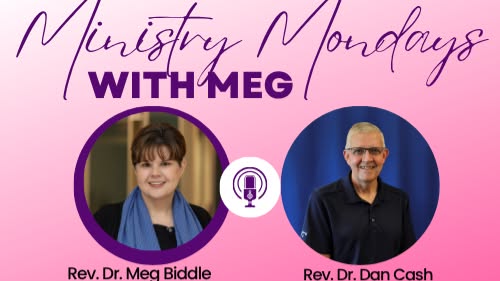
This week I was honored to be the guest on “Ministry Mondays with Meg” – a podcast from my friend and colleague Rev. Dr. Megan Biddle. We talked about 35 years of ministry, writing, teaching, chaplaincy and pastoring. We discussed my three books: 8 Questions Jesus Asked; The Changing Church and Dakota Dreams and Hoosier Homeland.

It was a fun conversation and I invite you to give it a watch/listen. Just follow the link:

https://creators.spotify.com/pod/profile/ministrymondayswithmeg/episodes/Dan-Cash-e39v77j

Leave a comment

Filed under Christian Faith, Community, Leadership, Ministry, Pastors, Seasons, What I Am Learning, writing

There is Only One King

This past Saturday (October 18, 2025), according to some news sources over 7 million Americans joined together at over 2,700 protests held across the United States on what was called “No Kings Day II” (*No Kings Day I was held June 14, 2025). These individuals met in common bond around the concern that the current Presidential Administration is working to subvert democracy and moving at a fast clip in an autocratic direction more common to a dictator or king than what the United States Constitution proscribes for the Executive Branch of our government.

While I was not able to join the local protest due to another obligation, I had loved ones and friends who did participate. Consistent with what has been reported elsewhere, they said the local protest was peaceful, non-disruptive, and made up of people from varied age groups, ethnicities and political allegiance. In other words, it was a gathering held in the spirit of other American protests over the years, acting on the rights of free speech and independent thinking. It was not, as some critics claimed, an anti-American or non-patriotic act of disobedience – there being a distinct difference between disagreement and disobedience.  

It seems to me that if over 7 million Americans were willing to give up some of their Saturday to attend and participate in such a protest, there is a significant amount of dissatisfaction being registered concerning the actions of our current Executive and his administration. In short, many people (maybe most people?) are not happy with the autocratic acts of a president who continues to circumvent congressional oversight, and overreach on judicial precedents. Many people are worried about the direction the country is heading and the unwillingness of the other branches of government to act as a check and balance on an out-of-control president.

Continue reading

Leave a comment

Filed under Christian Faith, Leadership, Ministry, Pastors, Uncategorized, What I Am Learning

Book Update: Dakota Dreams and Hoosier Homeland

Dear Reader: If you have purchased a copy of my book “Dakota Dreams and Hoosier Homeland” I say “thank you!”. The book, released on September 19th, has produced a fair number of sales in these early days, and I am grateful. If you have yet to purchase a copy, I invite you to do so. You will find it an easy read of just 115 pages in the historical fiction genre, exploring the period of homesteading in the American west. Both paper back and e-reader versions are available here through Amazon.

In this world of writing and self-publishing, I am not very good at the marketing and self-promotion part. Like most writers I prefer to let the work speak for itself. Nonetheless, I know that one must encounter something multiple times in our over-messaged world today before determining to act. So, if you’ve thought about checking out the book, here’s a gentle nudge to prompt you.

For those who have, or will, read Dakota Dreams and Hoosier Homeland, I would invite you to offer a review on Goodreads. You can do that through this link.

Frequently Asked Questions: Here are my responses to some of the most frequently asked questions I have received about the book, for those inclined to read a little further.

Why did you decide to write a book like this, in the historical fiction genre?
The idea for this book lived in my head for a couple of years before I ever began writing it. I am a reader of both history and fiction, and sometimes historical fiction. For example, I find Theodore Roosevelt’s time in the Dakotas to be fascinating, and I have read quite a bit about it.
I knew I wanted to explore my Grandfather Clyde Cash’s Dakota homesteading story, but I did not have very many facts to build on. So, I began to research the period of history in which it took place, pulled together the family anecdotes I knew of, and created a story I hope in some way reflects the challenge of that period.

Is this a book about you, your experiences in the Dakotas?
While the book is about my grandparents, Clyde and Anna Cash, there is no doubt it became a way for me to reflect on my own somewhat recent experience in the Dakotas. While it has now been close to three years since I lived and worked there, I needed a way to process the experience and was finally ready to do so. Clyde and Anna’s story became a means of doing just that.
So, if you were curious about “what happened” or “why did Dan come back to Indiana”, this is your chance to read between the lines a little and draw your own conclusion. For my part, the book is now closed on that brief chapter of my life, including it’s disappointments and discoveries.

Do you have any other books in the works?
Someone who loves to write always has another idea or two incubating, and this would be true of me. I’m not ready to promise anything by name just yet, but I am continuing to work on a ministry leadership book I’ve been developing over recent years. I also have another historical fiction idea I’m anxious to explore and see if it my grow into a book.
The writer side of me does it for the enjoyment, certainly not the financial rewards! I always appreciate hearing from readers who like my work, or feel some connection to it.

Have you written anything else?
Yes, I have co-authored two earlier books, 8 Questions Jesus Asked, and The Changing Church, both Judson Press publications. You can learn more about those books on the “Books by Daniel Cash” section of this site. I also somewhat regularly blog post here at danielcash.org and write, and occasionally share a podcast through my Substack page.

If you have not yet subscribed to this page, I invite you to consider doing so. Thank you!

2 Comments

Filed under Family, Uncategorized, What I Am Learning, writing

New Book Release: Dakota Dreams and Hoosier Homeland by Daniel M. Cash

My latest book, Dakota Dreams and Hoosier Homeland, a work of historical fiction, has been and is available in paperback and e-reader format on Amazon.com. You can listen to my podcast about the book, featuring the book’s Prologue read in my own voice, on my Substack page. You can also read the Prologue below.

Dakota Dreams and Hoosier Homeland is the story of Clyde and Anna Cash, my paternal grandparents, set in the year 1915 between the communities of Greencastle, Indiana and Arnegard, North Dakota. My grandad Clyde tried his hand at homesteading at about that time in history. And, while I do not know all the particulars to his story, I have researched enough to have created a story that may represent some of the challenges and opportunities he faced. Meanwhile, back home in Indiana, his girl Anna (my grandmother) was patiently, or maybe not so patiently, waiting for Clyde to come to senses and come home. It was fun to imagine their correspondence and decision making.

The Dakotas will always have an imprint on my life, not only because of my grandad’s legacy, but due to my own time there over 100 years later. Writing this book became a way for me to to not only tell part of Clyde and Anna’s story, but to reflect on my own.

Here’s a preview from The Prologue of
Dakota Dreams and Hoosier Homeland:

When Clyde awoke on that early autumn day, he sensed the smell of smoke in the air. By now he had been on the prairie long enough to have heard about the dangers of prairie fires. Following the alert his senses gave him, he quickly went outside to scan the horizon.  To the southwest he saw a plume of smoke rising from above the land. It was the Lucas Johansen place. Lightning from the early morning storm must have ignited the fire.

Clyde wasted no time. He quickly dressed, grabbed an old blanket from his home, stepped into his boots and put on his hat, then high tailed it down the two-track from his place to the Johansen’s.  He jogged more than walked the ½ mile to their farm and saw on his arrival that the fire lay south beyond the homestead and barn lot.

Thankfully, Lucas and his brothers had already harvested the wheat crop earlier in the season, but the fire was making it’s way through the wheat stubble, threatening to move into the portion of the farm where the buildings stood.

Clyde took his place alongside the others, Lucas and Mrs. Johansen; Karl and Hans; Magnus and Marit.  He dipped his blanket into the bucket of water that had been hauled out to the field and commenced to fight back the flames where there was a gap in the line. Soon he was joined by his neighbor and good friend, Thomas O’Brien, who had also seen and smelled the smoke, and come to help.

The danger of prairie fires was something that had been expressed to both Clyde and O’Brien upon their arrival in the region.  Sadie Svennson had been the first to school them on this phenomenon once when they had seen evidence of such a fire off in the distance from Arnegard.

The arid nature of the climate, prevalence of wind, ample availability of surface fuel and ignition caused by lightning from summer storms often came together as a perfect storm for this particular disaster.  Too many homesteaders had been driven to ruin by such a prairie fire in the past, meaning that everyone came to the fore when such an event sparked nearby.  You never knew if you, your family and your farm might be the next victim.

So, in the best sense of the tradition behind the name “Dakota”, you went to help your “friends”.  You became an “ally” on the prairie, looking to assist in any way you could to get the fire under control, or to at least protect the farmer’s home and farm buildings, livestock and equipment.

After a grueling couple of hours fighting back the flames, the crew working against the Lucas’ Johansen prairie fire got the upper hand.  Assisted by the decline of the wind and consummation of the available fuel, the fire began to play out.  The fact that Karl and Hans had taken their work horses and plowed firebreaks into the field was likely the ultimate difference between winning and losing that day.

Clyde was grateful he had been able to lend a hand. But the event gave him pause. Once again, he was mindful of just how difficult this life on the northern prairie could be. There were so many challenges that could arise – insects, fire, wind, storms, drought.  He knew with winter on the horizon that some of the most challenging days were still to come.

“Come to de house for a drink of vater, Clyde Cash”, called Mrs. Johansen. “Ve vant to thank ye for coming to our aid today.”

So, Clyde joined the others to quench his thirst.  Mrs. Johansen brought out some sour dough bread with jam, as well. And the soot covered homesteaders, from oldest to youngest paused to give thanks for God’s protection and deliverance that day.

This was Lucas’ Johansen’s prayer:

“Ve tank dee Lord God for die deliverance. Yee brought us friends and family to fight back de flames and save our home. Indeed, as your Good Book says, ‘de flame sal not consume you’.”

As he went back home to pick up the chores of the day on his own homestead, Clyde continued to marvel at his neighbor’s demeanor.  The devout Lutheran Norwegian was something of an enigma to Clyde. He could be gruff, blunt and even standoffish. But other times his true metal and character, including his faith, shone about as bright as anything Clyde had experienced. 

Thinking then of the others who were part of that morning’s fire fighting crew, Clyde smiled to himself about the diverse cast of characters he had met on the North Dakota prairie. He knew he had another story to write to Anna about in his next letter.

© Daniel M. Cash 2025

You can place your order for the paper back or e-book version of Dakota Dreams and Hoosier Homeland now.

For more information or to receive email notices about my writing you can subscribe to my blog or substack page.

2 Comments

Filed under Christian Faith, Community, Family, Passageways, Uncategorized

Halt the Summer Postmortem!

The end of summer’s lifespan has been once again vastly overstated.  Do not write her obituary just yet.  As we move into this third full week of September, and the meteorological end of the summer season is in full view, she has arisen!

We can feel the brush of her high 80’s hot air and bask in the bake of her high noon sun. Sure, the color of the palate has changed – highlighting browns and yellows now, but where sprinklers sputter the grass is yet bright green and growing.

Hummers and Monarchs may be preparing for migration, and who can say about the geese of Canada?  Most of them are now year-round pests. Sunflowers are still blooming, as are zinnias; and sedums are coming into their own.  This can be true even as the coneflower and black-eyed-Susan have gone the way of the day lily and iris.

A bike ride in the countryside shows soybean fields more yellow than green, and some even a crisp brown. The exception being the second crop group that grows green yet – shadowing out it’s wheat stubble bed.  

Some of the early corn has already been picked. Birds flutter out of otherwise drying corn fields, brown from the bottom up, as I ride past. They seem to say, “leave me be while I catch a late summer nap.”

The sun will set a fraction of time earlier this evening, and the rise just a tad later come morn.  We may awaken to temps in the 50’s, but they will be short-lived, climbing higher by the hour, like summer herself who has made a comeback.

It’s a last week, maybe two, in which to remember vacation days, holidays, pool and beach days, or fishing at the pond.  It’s a “Minnesota goodbye” summer offers – first from the front room, then the foyer, out the door and onto the porch, and finally from the drive.  “Come again” we say, “when you can stay longer next time.”
© Daniel M. Cash 2025

#bikeridephotography #backyardphotography

Leave a comment

Filed under Cycling, Holy Days, Passageways, Seasons

Why I Joined the Church Choir

The last time I sang in a formal, organized four-part choir I was a senior in high school.  That was forty-three years ago!  I was a semi-jock in high school – the starting 3 guard on the basketball team – so my singing in the choir was a bit of a surprise to some of my peers. Athletes and artsy folk didn’t mix too much in our school.

But I had grown up learning to sing in our church choir, sort of absorbing how to read music and sing bass next to my older brother, Dad and some of the other men of the church. I liked it. And with a free period in my senior class schedule, joining the high school choir was a good choice for me. I still remember some of the choral anthems we sang, and I appreciated our high school choir teacher. He picked good music and led with enthusiasm.

As a pastor I always found singing was my way of worshipping. I enjoyed preaching, but that was my work. Singing was my chance to participate with the congregation in worship. I would usually stand behind the pulpit and the song leader and add my voice with gusto to the congregational offerings. 

It wasn’t always a great contribution. I became a bit of a freelance singer over the years.  I was even known to sing a few measures in a sermon if the mood struck and song fit my theme. I had watched a former preacher of ours do this with great effect as a child.

Continue reading

Leave a comment

Filed under Christian Faith, Ministry, Pastors, What I Am Learning

Meanness Unchecked Leads to More Meanness

It is sad to watch our nation turn into a meaner and more isolated version of itself.  But this is clearly what is happening under the current administration.  Despite the provision in the U.S. Constitution for three co-equal branches of government (legislative, judicial and executive) it seems that two of the three (especially the legislative) have mostly chosen to look the other way while the executive who occupies the people’s house remakes things in his own selfish, mean-spirited likeness. This is contrary to the founders desire that these branches serve as a check to balance the weight of influence and power.

Politics has always been dirty business, and I am sure we could point to periods of history that were fraught with decisions, actions and words filled with vitriol and unproductive outcomes. But surely this time in history will prove to have rivaled them, if we survive it intact and are afforded the opportunity to look back on it one day.

One of the simple lessons that may be most prominent is something we all should have learned in our primary education: meanness unchecked just leads to more meanness.

Do you remember this lesson from the schoolyard? The class bully who was given a free pass on unsavory behavior always took that as permission to increase said behavior. Worse yet, was when the bully garnered a following of kids who praised and fed that behavior. They did this by pouring flattery on the misdeeds of one who showed no conscience or sense of fairness. There’s nothing a bully needs more than to be flattered and made the center of attention.

It seems to me that we are witnessing this today on a much grander scale as national and even world leaders acquiesce to the whims and whiplash actions of an executive who feels he has a blank slate from which to wreak havoc on others. In just a few short months, having doubled down on experience gained from occupying the seat of power once before, this executive has challenged, and somehow blown past, almost every check on his office. It’s as if he can’t quite believe the people gave him the keys to the office again. Neither can I. One thing is certain he isn’t going to give them back without a fight.

Continue reading

5 Comments

Filed under Christian Faith, Community, Leadership, Ministry

The Family Undertaker

It’s funny where you mind takes you if you follow it – at least it can be funny how my mind works in this way.  Take this morning. I was out for a bike ride, following one of my favorite routes north on the People Trail and then out in the country, riding some of the county roads. I noticed that someone’s cat had lost it’s life on the road, likely hit by a car as it crossed in front of it.

It was a pretty cat, a kind of grey tabby, and I immediately began to wonder who it had belonged to. I imagined some young children who might be sad about losing their cat in this way, maybe their dad seeing it on the road and stopping to scoop it up, take it home and bury it.

The burial of family pets and animals can be a rite of passage for children.  I for one don’t favor sheltering children from these happenings, as death is a natural part of life, and grief is central to the human experience. Better to walk with them and help them process it from a more honest and healthy perspective. That’s the path we always took with our own pets and family. All of this led me to reflect on my own childhood, and how it was that I inherited the role of the Family Undertaker.

I grew up on a five-acre plot of land, in a rural part of the county, where we had pets and animals. There was always a family dog, and a variety of cats, sometimes with kittens.  In addition, there were the dogs and cats of neighbors that would come onto our property to visit.

We also had a pond, with a fenced in meadow of land around it that we called the Sheep Lot. You guessed it, there were sheep that dwelt in that plot of land, as well as a couple of goats, and a plethora of ducks.  The ducks would nest in the Spring and often hatch broods of ducklings, which became fodder for the snapping turtles that lived in the pond, or the cats that prowled the banks. There was a simple block building that served as shelter for the sheep in the winter or rainy weather.  It was often lined with straw for bedding. I remember once walking into that building to find a fox with one of our ducks in it’s mouth staring back at me.

This was the life of my childhood. The animals, including the ducks and sheep, were as much pets to me as the dog and cats.  And, over the course of some years, I learned that animals, like people, die. Sometimes it’s due to accidents.  Sometimes it’s due to old age. When it happens, there is usually a discovery of the death (the fox with the duck, the duckling with a turtle bite through it’s breast, the cat on the road), followed by a time of mourning the loss, and the necessity of disposal (burial) of the body.

We used a portion of the Sheep Lot for the burials.  And, more often than not, once I was old enough, I was the one who did the burying. I buried ducks, cats, a racoon, dead birds, one of the sheep (that was a big hole), and maybe one of our dogs.

I developed my own technique for grave preparation.  I learned to cut and skim the sod off the top of the grave so that it could be reapplied later.  I measured the size of hole that would be needed, given the size of animal to be buried. Then I was sure to dig a grave deep enough that the deceased would be given an eternal rest free from any vermin who might come and dig it up.  This was important, I learned that grave robbers live among the wilds of the world.

I had to keep track of where prior graves existed in our version of a pet cemetery, though I never did mark the graves. One didn’t want to double dip, so to speak. So, I carried a kind of mental map of the area in my head. “That’s where I buried the sheep. That’s where I buried Tiger my cat. That’s where Buster lies.”  It got a bit crowded and I had to keep expanding the borders. But it was a task I took on with pride and a stoic sort of calling. I was the family undertaker.

Looking back, all of this seems to have been training for the professional role I would later occupy as a pastor, and now hospital chaplain.  Becoming comfortable with death, and the appropriate rites of grief and burial, may have prepared me, in part, to stand at the graveside of numerous people over the years as I officiated graveside funerals and led committal services.

I’ve lost track of how many times I have done this. I know that in my last pastorate alone I officiated over 130 funerals. Now, as a hospital chaplain, it’s rare to work a shift without a death.  I respond when notified, often meeting the deceased and family for the first time. I extend my condolences to the family, ask them to share with me about the deceased, offer words of comfort, and share a prayer of thanksgiving and commendation if they desire.  It’s an important ministry, helping in those transitional moments, to acknowledge the gift of a life and the sorrow of a death, and the continuation of living for those who remain. I do think I learned some of these things firsthand in my family undertaker role, taking care of the deceased pets and animals of my childhood.

We continued the tradition as we said goodbye to our pets with our own children and grandchildren.  My daughters companioned me to the vet as we had two beloved Corgi’s put down over the years, their quality of life and suffering demanding such an act of mercy. I buried their cremated remains alongside the planting of trees on our property. The grandsons assisted me with the last burial and that tree is known as Boomer’s tree. It was kind of a full circle moment.

Cemeteries are sacred places. I have been to many of them to perform last rites of passage. I have some favorites.  There’s a beautiful cemetery in Vernon, Indiana.  And it’s hard to beat the Hope Moravian cemetery for it’s setting. Flatrock Baptist, not far from our home is nice. Maybe the bests view I ever had in a cemetery was in Snohomish, Washington, standing graveside on a hill overlooking the Snohomish River, with the Olympic mountains off in the distance.

But it all started with that Sheep Lot cemetery of my childhood.  And it all came back to me because I passed some family’s beautiful kitty whose life had ended on the county road.  It’s funny where your mind will take you, if you let it.

Daniel M. Cash © 2025

1 Comment

Filed under Christian Faith, Cycling, Family, Ministry, Pastors, What I Am Learning

This Land

This land, emblematic of her multitudinous and flawed inhabitants
Consists of varied features with their own perplexing presentations.

Vast arid plains which alternate from winter’s frigid to summer’s sultry grip.
Mountain ranges of different heights and temperaments.
Great Lakes with deeply cavernous plummets.
Rushing rivers that carry away precipitation toward
Oceans of endless water, wind and strength.

From the swamps of Florida and the bayou,
To the wheatfields of the Palouse and breadbasket that is the Midwest,
America is a geography diversified.

Like the people who have populated her, migrating from various other places.
These people, taking over that which was not theirs, have often
Convinced themselves they can reject others who were here first, or those who would follow later.

The curvature and evolution of this land is ever changing
Like a great dune that is wind swept this way then that.
From Kitty Hawk and the Outer Banks to the shores of Lake Michigan and the
Great Sand Dunes National Park in Colorado.
This, but one example of change the land both knows, endures and welcomes.

Consider too, though on a longer timeline, the change of canyons and landscapes
Where rivers have been ceaselessly carving, time standing as witness.
Or animal species who once roamed in mass, only to face near extinction,
Sometimes reintroduced. Change and the land have gone hand in hand.

A reminder, during what is a fragile period, that this land oft withstood when it seemed she might not. Withstood weather, economic challenge, civil war, political division and corrupt leaders.
Withstood to stand another day, waiting in hope as for a new dawn.

Far from perfect yet persevering, the homeland seeks to host those who know it and those who would.
An oasis, but sometimes a desert, she can be fickle.
She calls for fortitude from those who would prove up homesteads and speak for justice.

Dream? Yes, dream.  To be a place where children of all skin color, language and creed stand hand in hand to voice a song, pray a prayer, or learn a lesson.
Dream? Yes, dream. To be a place that favors not just those who measure wealth by mammon, but those who know richness comes in many denominations.
Dream? Yes, dream.  Be a dreamer just like those who first came to these shores, and
Those who still yearn to here dwell and be free.    

Dream, and then sing, taking up the prayerful lyrics of ancestors to not give up on the: 

“Land where (our) fathers died” but “from every mountain side”
Let freedom ring!
“No more shall tryants here with haughty steps appear”
But “let mortal tongues awake” and “let all that breathe partake”
“Long may our land be bright, with freedom’s holy light.
Protect us by Thy might, Great God, our king.”

© Daniel M. Cash 2025

4 Comments

Filed under Holy Days, Passageways, Poetry, Travel

My First Spiritual Directors

Maybe you have heard of the Christian practice of spiritual direction?  It has been in existence for quite some time and has found both renewal and expansion in recent years. While the roots of this practice are biblical, modeled in the mentorship and guidance we see in relationships like those of Jethro and Moses, or Eli and Samuel, the formation of the practice really originates in monasticism.  During the days of the Desert Fathers and Mothers it was common for Christian pilgrims to come to them for direction.  And the direction they were seeking was spiritual in nature.

In their book The Practice of Spiritual Direction (Barry & Conolly,1986) the authors offer this definition: “Spiritual direction is help given by one Christian to another which enables that person to pay attention to God’s personal communication to him or her, to respond to this personally communicating God, to grow in intimacy with this God, and to live out the consequences of the relationship.” 

Spiritual direction involves both the director and directee or pilgrim.  It centers on the spiritual director’s ability to create space for their directee to explore what they may already know but have found hard to access. In this sense, the work is relational as well as prayerful and reflective in nature.  It’s work that moves at its own pace of discovery, not to be rushed, yet purposeful and guided.

I have had two occasions in which to benefit from a spiritual direction relationship.  One was associated with a Sabbatical.  I built into my plan and budget a sequence of spiritual direction sessions upon the sabbatical’s end to unpack and reflect upon the experience and what lay ahead.  I met with my spiritual director face to face about every four to six weeks for about an hour, during which time she would gently help guide me through whatever question, event or exploration I felt was brimming in my spiritual life.  It was a rich time of discovery and exploration, centered in listening and paying attention to God’s communication.  The insightful questions and observation my director raised were poignant ways of drawing my attention to my relationship with the Lord.

Continue reading

Leave a comment

Filed under Christian Faith, Ministry, Pastors, Spiritual Formation, What I Am Learning

Why Excavation is Important in Leadership

I have always found the practice of archeology interesting.  I admire the patience and craft of those who carefully dig and unearth the evidence of prior civilizations or chapters of current ones.  It’s careful, detailed work that can reveal insight and evidence of what life was like then, helping inform how life can be lived now. By examining the ruins and relics of people who lived years before, we come to understand not only the challenges and opportunities they faced, but also how those very issues have shaped humankind in the years that followed. 

When I applied this thinking to my craft and vocational history of pastoral ministry it generally proved helpful. By doing some archeological like work, examining and studying the contributions of those who lived and led before I ever arrived, I came to know and appreciate the history of the congregation I was trying to partner with and lead. Looking at prior historical records, talking with people who had been present during prior chapters, and gaining insight into what life was like in that community decades prior, demonstrated how patterns and culture was built that is still evident today.

In like manner, as a leader, this practice makes you aware of the importance of giving your best as you attempt to build on that legacy by not repeating similar mistakes, but displaying a capacity to learn, adapt and contribute in such a way that is for the good of all – including those who will one day follow you.

Here’s how the Apostle Paul speaks to this issue in some of his writing:


By the grace God has given me, I laid a foundation as a wise builder, and
someone else is building on it. But each one should build with care. 11 For no one can lay any foundation other than the one already laid, which is Jesus Christ. 12 If anyone builds on this foundation using gold, silver, costly stones, wood, hay or straw, 13 their work will be shown for what it is, because the Day will bring it to light. It will be revealed with fire, and the fire will test the quality of each person’s work. 14 If what has been built survives, the builder will receive a reward. 15 If it is burned up, the builder will suffer loss but yet will be saved—even though only as one escaping through the flames.
(I Corinthians 3:10-15 NIV)

In pastoral ministry you are almost always building on another’s foundation.  You are adding another layer to the work of those who have gone before. One day the archeologist historians who conduct digs will find layer upon layer of work in the artifacts and remains, including your contributions. Some layers might be thicker or more productive and meaningful; others slimmer or briefer.  But consistently – whether by intention or not – they each benefit from the foundation work that came before them.  Should they choose to try and eradicate that work, they would weaken the overall structure. Should they choose to improve upon it – or stabilize it & then add to it – they would benefit the structure.

What’s true in churches, regarding this building on prior foundations, is also true in other institutions, including industry, academia and government. Occasionally a leader will come along who displays no regard whatsoever for the foundation or layers of work that preceded him. (Could be “her”, but let’s face it this type of arrogance is most often male!)  This arrogant leader, who tends to believe he has all the answers, then proceeds to dismantle everything that has come before.  And, to the peril of the institution and it’s people, the result is to severely weaken the overall structure. Why? No attention was paid to learning from the layers of prior chapters. History was deemed an insufficient teacher, or too boring, perhaps requiring study and reading – something an arrogant leader may feel he has no time to devote toward.

But rest assured, archeologists would probably concur, this leader’s efforts will also one day lay in the rubble of relics and artifacts to be studied. Perhaps they will be found in the digs of a civilization that failed and has fallen because of it’s disregard for its foundation, or its arrogant assumption that one can build without a foundation.  Time will tell – as it almost always has a way of doing.

© 2025 Daniel M. Cash   

For more of my work, including a weekly podcast “The Cash cache” go to : https://cashdan.substack.com/

Leave a comment

Filed under Christian Faith, Leadership, Ministry, Pastors, Uncategorized, What I Am Learning

The Image of the Good Shepherd

This past Sunday in the Church year was the 4th Sunday of Easter, also traditionally known as Good Shepherd Sunday.  This means that most of the lectionary readings for the day contain some shepherd type reference to God or Jesus.  For example, this year’s readings included: Psalm 23 (The Lord is my shepherd . . .), Revelation 5:11-14 (Worthy is the Lamb), and John 10 (I am the Good Shepherd).

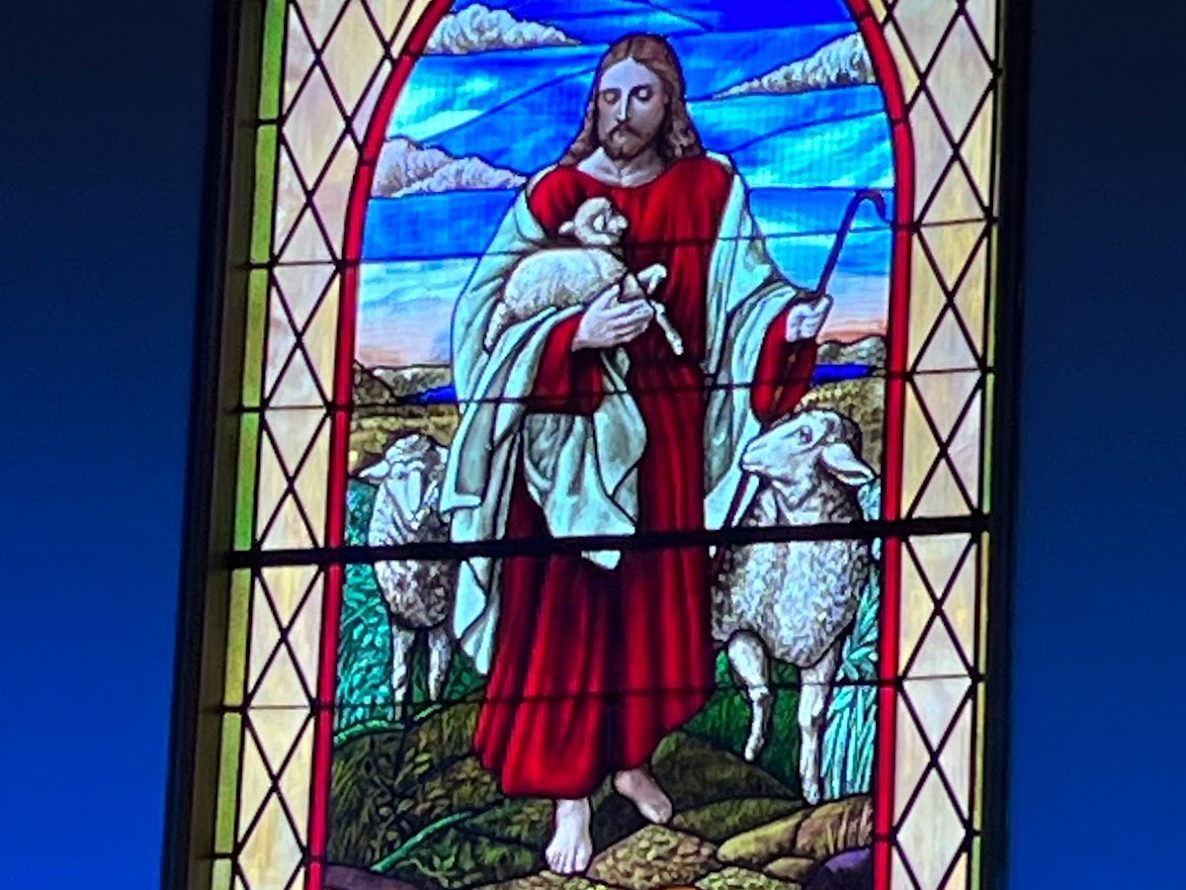
I remembered this as Sunday morning began, having read a meditation to that point, and from years of preaching on the theme on the 4th Sunday of Easter. Then, as we attended church that morning with our son and daughter-in-law at Platt Park Church – Denver, the focal point of the worship space just happens to be a stained glass window of Jesus as the Good Shepherd.

The Good Shepherd – Platt Park Church

I teach a college class, Introduction to Christianity, in which I point out the importance of art in conveying the Christian message over the years. This was especially significant in a largely illiterate world, as the arts could communicate the Gospel message to audiences who lacked the capacity to read. Art reinforces the spoken message. Art reaches senses other forms of proclamation do not.

The shepherd image of God is one Jesus willingly embraced. Like us he prayed the 23rd Psalm. He spoke of sheep and shepherds in his parables and teachings. His entry into the world was celebrated by shepherds. And he embodied the role with his followers.

Jesus understood that the image of a Good Shepherd is personal and intimate. It conveys care, protection and guidance. A shepherd leads the flock, provides for their wellbeing, knows each sheep; and, if necessary, rescues and restores them to the fold.

The sheep know the Good Shepherd’s voice. They trust their shepherd and find contentment and rest in his care. 

I considered each of these things on Sunday morning, inspired by the visual that was so prominent in the room. I wondered how often worshippers over the years had taken to heart this non-spoken message even as they listened to the day’s spoken word. Indeed, art has been communicating a message in that sanctuary since the window was first installed.

The worship service on Sunday included the dedication of our granddaughter, which was part of why we were present. As promises were made and affirmed by her parents and the congregation, and a blessing was pronounced over sweet Cora and her parents; I thought of how parenting is a lot like good shepherding. It’s hands on, attentive and protective, yet also encouraging and coaxing. Good parenting, like good shepherding, provides a space for safe growth and exploration. It’s present and available ever ready to step in if needed; but allows for independent formation and discovery as a child grows and matures.

Jesus does all of that and more for we sheep. When we live our lives within proximity to him, we thrive. We can hear his voice. We know he cares. One day we might be the sheep in his arms, another day the one trailing behind. We have all we need. Our souls are restored. The oil of his anointed blessing overflows and runs down upon our life in ways words find difficult to explain.

It’s an image that continues to yield meaning, just as the Good Shepherd window does in the worship space. Just as the image of loving parents holding their infant girl did beneath it. This was the dominant message of the 4th Sunday of Easter for me.  For which I am, and I hope you are, thankful.

© Daniel M. Cash 2025

Leave a comment

Filed under Christian Faith, Ministry, Pastors, Spiritual Formation, What I Am Learning

Overcoming One’s “Dark Night of the Soul”

Recently the world news has focused attention on the passing of Pope Francis, whose death followed a 12-year ministry as head of the Roman Catholic Church. Though not a Catholic, I found Pope Francis to be an interesting and inspiring Christian leader. I appreciated his humble posture and more open stance on issues, as well as his generosity toward all people.

Not too long ago I read his biography “Life: My Story Through History”. In this book Francis referenced a two-year period of ministry he referred to as a “dark night”. This occurred in the 1990’s when he was removed from his position as a provincial of the Jesuit order in Argentina and sent to a rural parish. It was something of an exile which he called his “dark night of the soul” and a “great interior crisis”. Pope Francis did not offer much more than those comments on these two years of his remarkable life, but they clearly formed and shaped him. According to some he emerged from that time a kinder, humbler person; like the one who was so fondly remembered over the past days.

This is what can take place as a result of enduring what in spiritual terms is often called the “dark night of the soul”. The phrase is attributed to Saint John of the Cross, a 16th Century Spanish Carmelite friar and mystic who wrote a poem by that title. By definition, such an experience is “a period of spiritual desolation in which all sense of consolation is removed.” Plainly put, the dark night is a difficult, painful period in one’s life.

I suspect that many, if not most, spiritual leaders go through their own version of a dark night at some point. It might be a particularly difficult time of ministry during which your leadership is questioned, or you are questioning your call or faith. Dark nights can be self-imposed or just creep up on you. They are not limited to those in leadership. Any Christ follower can be susceptible to a dark night where there are more questions than answers and more silence than affirmations.

My own experience with this is still fresh. In the later part of 2022 I made a ministry transition, leaving a pastorate of fifteen years for another opportunity. Looking back, I can see that while I was correct that it was time to step away from that pastorate, the call that I pursued was of my own forcing. In other words, I pursued a job that was not a good fit, bringing on my own dark night experience. There was some arrogance and willfulness in my saying “yes” to that call, and I regret any pain or confusion it may have caused. I left that position after just three months.

What ensued was a very lonely time of introspection. The dark night followed me and, if I’m honest, endured another couple of years. I did not question my faith, but I did face the humbling experience of facing my failure and self-induced disappointment. There’s something about falling on your face that is humiliating. When you do in front of an audience of your peers, including those who questioned your decision and would probably like to say “I told you so” – that is truly mortifying. But, if you can dust off the humiliation and swallow your pride, so as to engage in the emptying work of prayer and formation, good can come from the void of silence and darkness.

Throughout my own dark night experience God continued to place opportunities of service before my path that have resulted in a reaffirmation of my call and gifts. I would call these opportunities part of my formation or re-formation. Hopefully they have caused me to be a gentler, kinder version of myself.

From time to time I have a flashback to my dark night days, feeling the emotions and disappointment of that time anew. Thankfully these experiences are becoming fewer and less frequent. But I think they remain as a means of my not forgetting the work God seeks to do in and through me today.

It’s a bit daunting to write about this from such a personal place of discovery, but I do so in hope that it may speak to someone else. If you are in that proverbial dark night place, please know that you are not alone. Many, maybe most, others have been or are there too. It’s not the end of things. There is a repeated theme in the Bible of wilderness. Jesus spent time in the wilderness, and Israel labored there. Why should we expect to avoid it? The important thing is not that we were in exile, but that we emerge from it – strengthened, changed, and open to continue in God’s grace and love.

© Daniel M. Cash 2025

If you are interested in reading or listening to more of my work, I offer a podcast called “The Cash cache” through Substack that features many of my stories and reflections written over the years in my own voice.

1 Comment

Filed under Christian Faith, Hope, Ministry, Pastors, What I Am Learning

The Gift of a Power Outage

I was working at home the other day when in the early afternoon the power went out. Just like that, no lights, no internet, the home appliances I had started (dishwasher and clothes washer) all stopped working.

My first thought was “Oh no!”. I had some things planned. I was going to record a video lecture for my summer class, do some writing on my laptop, and work through a spreadsheet related to financial planning.

Then I thought, “Oh yes!”. This power outage just might be a gift. Duke Energy had already texted an official notice with projected restoration time – in about three hours. So, sure I could still write and plan on my laptop, it has a good battery function. But instead, I picked up a composition notebook and pen and headed for the screened porch and my favorite chair.

The gentle patter of the Spring rain was palpable as I sat down, notebook in hand. A cool breeze came through. Birds were singing, and the dogwood tree was nearly in full bloom, just in the middle of my line of sight. What a gift this interruption. Not so long as to be terribly inconvenient or troubling, but a break to be savored. To sit, listen, look, observe and reflect.

A squirrel scampers along the top of the neighbor’s fence, while his mate or rival, not sure which, chucks and chortles at him. He stops, as if to consider the message, then silently moves along. Finally, he sits on his back haunches and looks my way. What is he thinking?

A cardinal lands in the upper branches of another neighbor’s recently leafed out tree. She’s busy flitting from branch to branch. There’s some feather preening undertaken, making use of the light rain. It reminds me to put out the bird bath. But that’s a chore that will wait another day. For now, I sit amidst the suburban sounds of nature on a rainy Spring day.

Iris are budding. The miniature lilac bush is deepening in blossomed hues – looks like it did survive that recent freeze. Peonies are forming rounded buds, erect for now, though when in full bloom this rain would weigh them down. Tulips have mostly yielded, following the lead of their daffodil cousins. And the forsythia is now more green in foliage than yellow in blooms.

Just beyond, the garden lies quiet. Some seed planted late last week has yet to germinate and emerge, but with the rain’s call and blessing it will soon do so.

I like taking stock of these things that a power outage has brought to my attention. They are markings of life and change. None of them come with the hum or glow of electrical wattage, and somehow that makes them more wonderful.

A book sits by my chair, along with my trusty Kindle reader. It’s a great afternoon for some reading. But I think not with the backlit E-reader today. No, this window in time, this gift of a luddite afternoon, calls for a hardback with print on paper, read via natural light.

Who knows, a few pages read might induce a nap! That too would be fitting. Lights, the hum of appliances, and noise of electric powered living will resume soon enough. If they don’t, we will light a candle as dusk falls. Maybe we should do that anyway.

© Daniel M. Cash 2025

1 Comment

Filed under Seasons, What I Am Learning

Living Between the Kingdom and Empire

As Christ followers, fresh from the “Alleluias” of Easter’s joy, resume daily routines, will the refueling of Resurrection Day and it’s news be proven to have emboldened us to live as the proverbial “Easter people”? Or will the gravity and bleakness of empire infiltrate our lives and overtake that joyous message? These are the questions I’m thinking about personally as a contemporary disciple of Jesus facing the age-old tension of living between the Kingdom of God and empire of today.

To state it another way, how can the residual effects of full Church sanctuaries, inspiring sermons and the uplifting music of Easter inject us with a booster shot that propels us to live something closer to the “Kingdom of God” than the anxiety and despair of today’s broken imperial system? Perhaps it’s too much to ask, but then again, maybe not.

The Resurrection bespeaks a triumphal death defeating Messiah who calls us into the fullness of abundant and everlasting life. This is life in God’s Kingdom where the reign and rule of the living Jesus is welcomed and celebrated – Christ is Risen!

In this Kingdom living we set aside the restraints and perilous news of the world, in favor of the ways of the living King Jesus. We are released from the magnet pull of overbearing messages via social media and traditional media outlets. Released to spend time with kindred siblings in Christ and focus on the ways of Christ himself. In this release we feel and affirm the defining identity of our “in Christ-ness” that both calls us apart and sends us forth.

Continue reading

Leave a comment

Filed under Christian Faith, Holy Days, Hope, Ministry, Pastors

Two Parades (A Palm Sunday and Holy Week Meditation)

This is a week when we commemorate two parades separated by just four days. The first occurred on a Sunday, the next  on a Friday. Sunday’s parade was a most unlikely one.  Spontaneous in nature, it announced the arrival of The King of Kings.

His entry into the city was marked with “Hosannas” and the waving of palm branches. This, coupled with the makeshift red carpet of coats and cloaks, served to announce an inauguration. A leader of true significance was entering David’s City, an heir from the royal line.

Recognition came from the masses, those of common estate who were filled with hope and roused to action. Might this be the beginning of the end?  The end of occupation? The end of Roman rule? The end of unjust taxation and oppression?

What kind of king can deliver such things? A revolutionary, an upstart who overturns tables and drives out corrupt moneychangers. Yet this King was humble, riding in on a donkey’s colt, not a noble steed. His countenance was sorrowful, as if he knew what others did not. “O Jerusalem, Jerusalem!  How I have longed to gather you as a hen does her chicks.”  From the parade’s elevated origin point above the city he wept over its past and present.

Soon, he knew, the very voices raised to his honor would be crying for his death. “Hosanna” would fade and be overmatched by “Crucify him!” 

Friday’s procession led the soon to be crucified Jesus down the Via Dolorosa (the way of suffering). It was a procession to Golgotha, the place of the Skull, where executions of traitors were carried out. This procession also drew the attention of many, but for different reasons. For some it seemed the completion of a usurpers false promises. For others it seemed the end of what had once been a great hope.

Derision, mockery and tears took the place of palm branches. There was no runway of any kind of carpet. The disdain and shaming would continue throughout the journey and onto the cross. “You saved others, save yourself if you are the Son of God”.

The Palm Sunday parade had but one entry. Jesus was both the Grand Marshall and sole exhibit.  The Good Friday procession would feature a beaten Christ, accompanied by the power of Rome in the form of a military escort.

Two parades separated by just a few days. That’s how fast hope can be dashed, how fickle public opinion can be swayed. In just a few days, promise yields to punishment. 

It’s important that we remember these two parades. They both reveal the identity of the Christ (Triumphant Savior and Suffering Servant). Both can be true at once.

They also reveal something of human nature. Many, maybe most, want a heroic Messiah who demonstrates power and decisive action, one who is the pride and joy of Sunday.  But what’s needed is also the humble servant of Friday who gives up his life that we might live.

Real, heroic leadership is both these things and much more. Don’t let the pretenders fool you. Cruelty, hatred, force, nor pompous proclamation do not a worthy king make.  Give me the one on the donkey, the one who carries the cross. He is the only King we need.

© 2025 Daniel M. Cash

1 Comment

Filed under Uncategorized

An April Awakening

Bird song calls for an April awakening.
Daffodil responds with exuberant blooms.

The garden absorbs replenishing rains.
Strawberry patch greens and sends forth runners.

Rain barrel awaits its overturn from winter
to begin the seasonal work of gathering.

Deck looks to be populated again by furnishings to welcome guests.
An outdoor oasis of green, bespotted with bursts of yellow, white, purple
and pastels as blooms bring color to the backyard canvas.

Trees that have stood as quiet sentinels through dormant days
now bud and leaf forth in response.

The call for an April awakening comes to all.

© 2025 Daniel M. Cash

Leave a comment

Filed under Poetry, Seasons

“Going to Seed” (A Lenten Sonnet)

“Unless a kernel of wheat falls to the ground and dies, it remains only a single seed. But if it dies, it produces many seeds.” – Jesus (John 12:24 NIV)

New birth comes from rebirth. Death begats life.
Lose life and save it. Serve others, find hope.

We join Jesus who invites: “Come and die”.
“Die to self. Follow me”. Blossom. Bloom.

Seed to soil, germinate, mature, bear fruit.
Beyond self, looking out, opening up.

Abundant life today and tomorrow.
From one to many, from little to much.

Lay down freely, sprout forth obediently.
Multiply, influence. Son light yields life.

Practice living by giving up your life.
Greater love has no one save Christ Jesus.

His example is ours to follow up.
Fall to the ground, rise in new life and hope.

© 2025 Daniel M. Cash

Leave a comment

Filed under Christian Faith, Holy Days, Poetry

Practicing a Third Ordinance

I have often said that “being Baptist is messy”. One could understand this statement about Baptist-ness in more than one way. Baptists are messy because we are an interdependent group of churches who value autonomy over hierarchy. (There is no One greater Baptist Church, just many churches). We are messy in our congregational polity, giving each member a voice and vote. But maybe we are our messiest in our historic toleration of varied opinions and outlooks that exist within a congregation, or denomination, of people. As such Baptists have been organized, in whatever fashion that organization takes, to appreciate the “big tent” of “differents” (different opinions, viewpoints, experiences and people) that we tend to be.

A characteristic that allows this to be part of both our heritage and our present is the appreciation for dissent. What is dissent? Dissent is an opinion, philosophy or sentiment of non-agreement or opposition to a prevailing idea or policy enforced under the authority of a government, political party or other entity (i.e. congregation) or individual. (source: Wikipedia.org)

For example, when the United States Supreme court delivers a split opinion in which a majority of the justices rule one way, while a minority see the issue another – the minority are invited to write and share the “dissenting” opinion. In this way, if the ruling is 5-4 or 6-3, those in the minority are still afforded the opportunity to articulate another viewpoint, even if that viewpoint will not be followed.

In Baptist life this reality of dissent often exists within congregational meetings and votes. I will not forget one of my first congregational meetings as a pastor when two respected laymen voiced opposite opinions on some matter that was before the church. Each man was listened to respectfully by the congregation, then a vote was taken resulting in one man’s opinion carrying the majority. After the meeting the two men met and shook hands, as the man whose minority opinion had been rejected said, “I may not agree with you, but I will support the will of the congregation”. That is about as civil an example of dissent as you can hope for as a pastor!

Continue reading

2 Comments

Filed under #change, Christian Faith, Community, Leadership, Ministry, What I Am Learning

The Beachcomber

A steady gait, head down, eyes focused
Full visor, tinted glasses, bare feet.

Oblivious to scantly clad coeds
Lying prostrate in their solar worship,

She pursues her craft with single-minded purpose.
Examining the deposits on surf and sand.

Scallop, limpet, jingle, olive, whelk
Conch (if lucky), sand dollar, tooth of shark.

Collections made and discoveries counted,
Many blemished or broken, others whole.

She moves with no regard for volleyball games
Or boogie board, determined to scan the sand.

Early morning, mid-day, at sunset
The work carries on, as if by calling.

One who appreciates the artifacts of ocean gifts –
She is the beachcomber.

Leave a comment

Filed under Poetry, Travel

The Lenten Rose

Persistent through winter’s slog
It hugs the ground in determination.

Preparing to respond when sun and light invite,
An awakening of consequential manifestation.

Producing some of the season’s first blooms
As if emerging from a tomb.

Providing hope and promise consistent
With a forgiven penitent pilgrim.

It is the Lenten Rose.

2 Comments

Filed under Hope, Poetry, Seasons

What We Learned Surviving a Home Renovation

In 2024 my wife and I survived a home renovation project. In all reality, our project was relatively smooth and pretty painless. But we did learn some things. After talking about it for over four years, gathering multiple bids and opinions; we finally signed on the dotted line and ventured into the partial finish of our basement and remodel of our kitchen. All told we added just shy of 1,000 square feet of living space to our home.

The wisest thing we did was hire a professional builder/contractor and his crew to complete the project. We knew this was far beyond our scope, expertise and learning curve. We wanted the benefit of someone with a good track record who would tackle the project with a reasonable projected start and stop date, disrupting our home life some, but not drastically. Making the decision to work with a professional and his team was likely the smartest decision we made.

We were told to expect roughly a 90 day start to finish timeline. That was exceeded only by a couple of weeks – not bad. The fact that I was able to be on-site much of the time was a plus, as I could answer questions, ask questions, run errands, receive deliveries, and make sure things were secure and buttoned up at the end of the day. These things became one of my part-time jobs for the final quarter of the year, and just a given in our routine through that time.

Here are some of the things we learned in surviving our home renovation project:
• Always get dressed when you get up in the morning. You never know when the doorbell is going to ring or who is going to show up at or in your house ready to work.
• When the project manager tells you they can do the new kitchen cabinet install in about 3 or 4 days, he really means 4 weeks.
• You can wash dishes in the bathtub, although it doesn’t do much for your back.
• Make sure you time your kitchen reno with a plan to sample the restaurants and fast-food outlets of your city.
• It’s amazing what you can make with a microwave, slow cooker and little creative thinking.
• If you opt to forgo the porta potty (in respect for the neighbors) and offer your half-bath instead, just figure on that half-bath becoming exclusive to the crew!
• Even the best intentions of a project manager or contractor to cover and protect your floors will not be failproof. There’s going to be some wear and tear on the parts of your home that are not being updated!
• Do not assume workers will be as concerned about turning lights off or locking doors as you.
• Be flexible, flexible and then flexible.
• Don’t make a decision without checking with your spouse first!
• That contingency budget? You’re probably going to need it!
• Just keep telling yourself how nice it will be when the project is done. It will be!

Leave a comment

Filed under Family, What I Am Learning

A Spring Pronouncement

Sprouts of green emerge
from winter’s slumber.
Persistent and hopeful against
the morning chill and March wind.

A foreshadowing of what will be.
Emissaries sent forth as harbingers of promise.
Some have been peeking forth for weeks.

These annual signs of seasonal transition
are visual reminders of rhythmic renewal.
While transitory figures bluster, they steadily return
– bespeaking the more solid footing of creation.

This too will come to pass – shoots of green,
blooms of color, fragrances of life.
Just as that too will one day pass,
noisy efforts at influence and posturing as if . . . . .

One seems very much eternal and offers reassurance.
The other will not last – “vanity of vanities” says the
Preacher of Ecclesiastes.

“A generation goes and a generation comes,
but the earth remains forever.” (Ecc. 1:4 NRSV)

© Daniel M. Cash 2025

2 Comments

Filed under Passageways, Poetry, Seasons

What I Learned Serving as an Interim Pastor

There is a unique role within congregational ministry, occupied by many yet only truly fulfilled by some. It’s the role of the Interim Pastor. The interim pastor serves between called pastorates in congregational life, as a search team is active guiding the church toward identification and call of its next pastoral leader. In this sense, interim work is liminal in nature – existing in a threshold space in which the interim pastor is helping the congregation look both backward and forward.

Today the position is given additional names like “transitional pastor” or “acting pastor”, but I prefer the term “interim”. Interim clearly identifies, from the beginning, that this is designed as a temporary role. From the moment you say “hello” to a congregation as their interim pastor, you know you will sooner than later be saying “goodbye”. And, if you do your work well, you will leave them prepared for their next chapter.

In order to do this, interim pastors do far more than simply fill the pulpit on Sunday. If you only have someone doing that for your church, you have a supply pastor, not an interim. The work of the interim pastor extends beyond the preaching task, though through preaching much of the work can be addressed, but not if the preacher is only a Sunday guest.

In their notebook on the tasks of Interim Ministry, American Baptist Churches USA list these five objectives interim leaders should help a congregation work through:

  1. Coming to Terms with its History
  2. Discovering a New Identity
  3. Shifts of Power
  4. Rethinking Denominational Linkage
  5. Commitments to New Leadership and a New Future

In my own interim ministry I tried to champion each of these tasks in various ways including through worship/preaching, Bible study, and working alongside congregational leadership. I’m not sure how successful I was in achieving these tasks to the degree that I had hoped, but at least those in leadership knew they were part of the objective of our shared time together.

In this reflection, however, I’d like to speak to some other level learnings from the interim experience. One might call these the “softer” or less objectified learnings that can take place in such a crucial time in the life of a church. So, here are some of things I learned while serving as an Interim Pastor:

Continue reading

Leave a comment

Filed under Christian Faith, Leadership, Ministry, Pastors, What I Am Learning

September Morn

Dawn breaks over dew laden lawns with the spritz, spritz of sprinklers.

Dogs trot past, humans in tow.
Those artificial green islands shine against the season’s dry, parched landscape.

Soon bikes and backpacks will overflow sidewalks,
as porchlights yield to a school and work day.

Garage doors open and close – signaling the neighborhood’s
release to pensioners and stay-at-home parents.

It’s a September morn.

© Daniel M. Cash 2024

Leave a comment

Filed under Community, Family, Passageways, Poetry, Seasons

What I have learned being in the minority

I believe everyone should experience being in the minority at times. It has much to teach us. Admittedly, I write this as one who has spent almost the entirety of my life as part of the privileged majority. If that seems too much of a “woke” statement for you, hear me out. I am a white, male American who has a higher education and has occupied positions of authority others often defer to in respect for the office if not the occupant. This alone has positioned me as a person of privilege and influence most of my life. It is a position I’ve occupied somewhat by fate, having been born into my culture and socioeconomic state. But I have also built on the foundation I was born into with certain efforts of self-improvement. While I try not to take my status for granted, or abuse it, I begin this reflection, admitting it.

That said, there have been several times in my life in which I’ve found myself in the minority. Almost always these have been learning opportunities, causing me to pause and reflect on life from the viewpoint of another. I’d like to share just a few of them.

Mission trips: I have been blessed to have participated in short-term mission trips to Mexico, Haiti, and Chile as part of ministry groups I’ve led or joined. While these trips took place in the security of like-lived groups of people, and under the direction of western missionaries sensitive to our places of origin, each offered moments in which I became acutely aware of my minority status.

Continue reading

1 Comment

Filed under Christian Faith, Leadership, Ministry, Uncategorized, What I Am Learning

Gardening by Dynamite or Cultivation

As a student of change theory and practitioner of leading change in pastoral ministry, I’m often curious about the methods leaders use when it comes to leading a group, be that a congregation, school, community or nation, through change. I debate my own success in that effort over many years and with several institutions. Some might say, those who can’t – teach or write! But I’ll leave it to others to evaluate my record of success as a change agent. What I want to reflect on in this article is how and why a very different approach to leading change, than I ever tried to utilize, seems to be in vogue today, and why it may just be the most dangerous leadership process of all.

First let me share the image of a change leader that I am most comfortable with and have tried to employ over my vocational career. It’s the image of a gardener, one who works in the midst of the garden (congregation, people, community or group) as part of them, faithfully doing the things gardeners do: cultivating, trimming and pruning, weeding, feeding, fertilizing, watering, training and harvesting. If a gardener came into his or her garden one day, mid growing season, and went scorched earth, ripping out plants alongside of weeds (I think Jesus cautioned about that), or taking a weed eater to all the vegetation, or applying weed killer to everything; the gardener wouldn’t have anything left to work with. That may well have been the gardeners intent, but the entire garden would become in the matter of a short timeframe, a do-over. Years and seasons of growth, cultivation, produce and discovery would be wiped out all at once. The biosphere of the garden would be in shock. The clear-cut approach would be as if a bomb (sticks of dynamite) had been set off, rendering what had once been, no more.

Some people lead change in this way. They fancy themselves “disrupters” and set about using the only tool they carry in their toolbelt – the tool of disruption – overturning, uprooting, clear-cutting whatever lies in the way. The rationale is often that things have become corrupt or broken beyond tweaking. Maybe, they say, the organization is too far down the lifecycle of decline and it’s better to start fresh, do away with, and go scorched earth. Never mind that this is a garden, and the earth (soil) matters. Never mind that some plants have been very productive, some growth extremely lush, and others at least faithful in their rootage if not always the most abundant.

Continue reading

4 Comments

Filed under #change, Christian Faith, Leadership, Ministry, What I Am Learning

The Truth Will Set You Free

Jesus said, “If you continue in my word, you are truly my disciples; and you will know the truth, and the truth will make you free.” (John 8:31-32 NRSV)

When I worked in conflict mediation in congregational settings I learned that in the absence of truth, people quickly made up their own truth. In other words, unless the congregation’s leaders were willing to be honest about whatever the conflict issue was, congregants were quick to supply their own version of events. This version, whether it was accurate or not, then became “truth” to those who adhered to it. It is always better, even if things are ugly or messy, to share the truth than try and shield others from it. Those who bury or hide the truth from others will usually wish they hadn’t. Once an “untruth” has taken form and set up like finished concrete, it’s pretty difficult to dislodge.

I’m thinking about this, as well as the maxim so often ascribed to Jesus – “The truth will set you free” – because in our world today it seems to me “truth” has become a rare commodity. Perhaps this has always been the case to some extent among those who seek to manipulate and maneuver people into their way of thinking or toward adoption of their agenda. But it seems that the disregard for truth, in favor of lies, untruths, partial truths or “my own truth”, has exponentially multiplied in contemporary society. Political leaders unashamedly espouse untruths repeatedly to gain favor with the electorate. Elected officials acquiesce to parsing words over versions of the truth. Even religious leaders look the other way when it comes to the propulsion of truth’s missiles being lobbed and landed.

Continue reading

Leave a comment

Filed under Christian Faith, Hope, Leadership, Ministry, Passageways, Pastors, Spiritual Formation, Uncategorized, What I Am Learning

On King, the “King of Kings” and those who would be king.

Do not put your trust in princes, in mortals, in whom there is no help. When their breath departs, they return to the earth; on that very day their plans perish. (Psalm 146:3-4 NRSV)

Today, January 20, 2025, is MLK Day, a United States national holiday first observed in 1986, honoring the life and legacy of Dr. Martin Luther King Jr. King, an ordained Baptist pastor (1948), is of course known for his role leading the Civil Rights Movement of the 1960’s. History has shown that he was an imperfect person who was investigated by the FBI for extramarital affairs. Nonetheless, his imprint on history is significant and lasting, as he used his considerable gifts in oratory, mobilization and peaceful, nonviolent protest to get the attention of a nation and turn the tide in America’s prejudicial treatment of people of color. Sadly, this prophet of change did not get to see the full fruits of his labors come about as he was assassinated on April 4, 1968.

Today, January 20, 2025, is also Inauguration Day in these United States, as the 47th President, Donald J. Trump, will return to office for a second term. Trump is just the second president, joining Grover Cleveland, to serve two non-consecutive terms in the White House. This is just the second time the inauguration of the U.S. President has fallen on MLK Day. Ironically, Trump’s inauguration will be held in the Capitol rotunda, just four years after that place was the scene of a riotous uprising by insurrectionists he incited to “stop the steal” – a phrase he used to propagate the falsity of his having won the 2020 election, which he did not.

Read more: On King, the “King of Kings” and those who would be king.

Trump, like King (and the rest of us), is an imperfect person. He too has been investigated by the FBI, though for differing reasons. He is on his third marriage, and in May of 2023 was convicted by a jury in a civil suit for sexual abuse and defamation. In May of 2024 he was also found guilty of 34 felony crimes by a New York jury of his peers in what’s been called a “hush money” case designed to influence his 2016 election. He is the first convicted felon to have been elected President of the United States. It should be noted that Trump continues to maintain his innocence and appeal these convictions.

I find it ironic that these two men, one named King, and the other who would like to rule as a king, are tied together by a day that is recognized for different reasons. The MLK holiday is designed to be a day of remembrance and service in honor of one who spoke truth to power. He called for a people who had historically been treated unjustly and inhumanely to be recognized as equal and given their unalienable rights of life, liberty and the pursuit of happiness. The inauguration of a U.S. President is a day filled with speeches, prayers, and the vitriol of campaign promises to be kept. When it involves the incoming President replacing an incumbent from an opposing party, it often signals a new direction and political approach to the issues news makers and politicians have succeeded in elevating before the electorate.

Trump, like King, but very different from King, has succeeded in the art of oratory and communication. While the tenor and tone of his messages (social media posts and rally speeches) often take a much darker approach, he has succeeded in using various mediums to connect with people. He has a very loyal base of supporters, many of whom have felt disenfranchised by the progressive American agenda of those who Trump has labeled “the enemy”. Trump has learned how to stoke the fires of such feelings and does it with success. This often aligns him with persons with whom he shares very little in the way of background, socio-economic status or even true faith identity. One of his most notable techniques is to repeat a falsehood so many times and with such conviction that people believe it to be true. He does not speak truth to power, but in power has been known to abuse truth for the propagation of his own agenda.

As the reader may by now have unraveled, I am no fan of Donald J. Trump. I do not look forward to the next four years of bluster and chaos that he will unleash on our nation. I am sorry to see him returned to the Oval Office. I have a different viewpoint from his on many of the foundational issues about which he pontificates. And I cringe at the methods he has used to scare, mock and belittle people into allegiance or silence. I pray for our nation and especially for those who may be in positions of service to thwart some of this man’s worst instincts and efforts. And, I pray that the weight and responsibility of the office might awaken in him some sense of statesmanship and service befitting a President.

As this day, January 20, 2025, approached I kept finding myself thinking about a different kind of king. Jesus is the King of Kings. He is the only anointed one worthy of our worship, complete allegiance and devotion. He is the Prince of Peace, a just ruler who is friend to all. He is a Savior who gave his life for all of humankind. In Him I put my hope, my trust and my future.

I came across Psalm 146 in the weeks leading up to today as I spent some time in prayer and morning devotions. It was as though verses 3 and 4 jumped off the page at me. No human ruler, prince, president or king is capable of delivering humankind or solving our problems. Some govern more justly and equitably than others. Some speak more eloquently and forcefully than others. But none of them – no pastor, no politician, no leader, no one – will succeed in the way or mission that Jesus does. He alone is who we are to keep our eyes on. He alone is who we are to listen to. His words are worthy our contemplation. His directives are our marching orders. His corrections are for our improvement. His example is ours to emulate. He is the King of Kings, the only true King, the righteous One, the Chosen.

So, whether, dear reader, my monologue has offended you or emboldened you, I would ask that you pause to reflect on this day, about the only King who is a position of authority over our lives that truly matters. All other kings and wannabe kings will turn to dust as their plans perish. But to this King, King Jesus, “every knee shall bow, in heaven and on earth and under the earth, and every tongue will confess that Jesus Christ is Lord, to the glory of God the Father”.

May God be with our new President, our nation, our world, and each person who is made in God’s image.

8 Comments

Filed under #change, Leadership, Ministry, Passageways, Uncategorized, What I Am Learning

Standing on Tiptoe

The entire universe is standing on tiptoe, yearning to see the unveiling of God’s glorious sons and daughters! (Romans 8:19 TPT)

Do you remember what it’s like to stand on tiptoe? Perhaps you’ve done it recently, trying to reach something that was just a bit beyond your height? Or, maybe, your tiptoe moment was related to craning your posture to see around an obstacle for a better view.

We took our grandsons to the Christmas parade last weekend. It was 90 minutes of standing on tiptoe in various ways. I watched as they stood on tiptoe to see the next float, entry, band or vehicle move past. They stood on tiptoe in expectation of candy being dropped into their bags. They stood on tiptoe to see over the protective fence barrier, to see past the people next to them, and to see beyond the current parade exhibit to the one that was coming after it.

This time of year is akin to “standing on tiptoe” for children and adults. There is a lot of hype about Christmas with it’s glitz and glitter, promise of presents and wonder. Our culture does much to promote this sensory experience of the tiptoe stance. Christmas Hallmark and other movies, big sales in stores and online, programs at church and school, light spectacles and experiences – these are all tiptoe aligned encounters. We live in a world marketed direct at your tiptoes! Even the grinchiest among us may on occasion acquiesce and give rise to the peer pressure that is directed toward the end of their feet.

Continue reading

Leave a comment

Filed under Christian Faith, Holy Days, Hope, Ministry, Uncategorized, What I Am Learning

The Blessing Behind the Begats

Abraham begat Isaac. . . . and Jesse begat David the king; and David the king begat Solomon of her that had been the wife of Urias . . . . and Jacob begat Joseph the husband of Mary, of whom was born Jesus, who is called Christ. (Matthew 1: 2, 6 & 16 KJV)

Singer song-writer Andrew Peterson has a song titled “Matthew’s Begats” that is part of his Christmas album Behold the Lamb of God. It’s a word salad of a song, filled with the names and lineage of Matthew 1 – a passage when read in the KJV that is filled with “begats”. “Begat” is an old English word that means to bring forth or bear. In Biblical use it is often associated with the role of a man who “begats” offspring, though of course said man could not produce without the equal, if not greater, participation of a woman. But in Bible times it was a man’s world, so Matthew’s “begats” is mostly about men – fourteen generations from Abraham to David, fourteen more generations from David to the Exile, and then (you guessed it) fourteen more from the Exile to Jesus.

In his gospel’s first sixteen verses we encounter names such as Phares and Zara, Aminadab and Salmon, Boaz and Obed, Jesse, Solomon, Rehoboam, Josaphat, Manasses, Amon and Jochonias, to call forth just a few. Mention is also made of Tamar, Ruth and “her who had been the wife of Urias” (Bathsheba), as well as Mary, the mother of Christ. Matthew 1:1-16 is probably not one of the more memorized or quoted passages found in the Gospels, but it is interesting. Without all that begetting, Jesus would not have been begotten, meaning no incarnation, no Messiah, no Christ, no Christmas. Translate that as no hope, no redemption, no restoration, no salvation, no re-creation, no eternity. It all began with the begats.

Continue reading

Leave a comment

Filed under Christian Faith, Holy Days, Ministry, Passageways, Uncategorized

Thinking Thankful Thoughts

I Thessalonians 5:18 says “give thanks in all circumstances; for this is the will of God in Christ Jesus for you.” (NRSV) How do you feel about that admonition?

It’s important to read and hear it within the context of Paul’s final words to the church at Thessalonica. He has spent some time offering them encouragement, commending their faith and faith practices, and speaking about coming days. It’s a very pastoral letter in tone and content, sent to a group of Christ followers whom Paul obviously loves. He’s just received a report of them from Timothy and he wants to speak into their lives as a spiritual father and guide.

In his final exhortations, from which the aforementioned verse 18 appears, Paul speaks to this community of faith with strong words of guidance: “respect those who labor among you”, “admonish the idlers, encourage the fainthearted, help the weak, be patient with all of them” . . . . “always seek to do good to one another and to all.” “Rejoice always, pray without ceasing” – then comes “give thanks in all circumstances”. This is quite a list of encouragements, is it not?

I cannot help but read and hear these words in the context of our own day. Here in the post-election postmortem, when some are giddy and happy, and some are completely deflated and discouraged; Paul’s words ring to me like a clarion call to the Church and it’s members. We can be reminded that we are a “fellowship of differents” (to quote Scot McKnight) who are called to put aside our different opinions and perspectives for the common good of gospel news and mission, among which is living as a thankful people.

Wouldn’t you agree that society finds itself in need of those who’s song of the heart is thanksgiving? Living, serving, engaging with others from a place of gratitude (graciousness, generosity, kindness) is akin to bringing the refreshment of a cold cup of water to the dry, thirsty, parched climate of today’s culture. Just as Paul knew that the Christ followers of Thessalonica would more greatly effect change and draw others to Christ’s mission from a posture of thanksgiving, it seems the same is still likely.

In my ministry conversations these days I encounter people who are weary of negativity and finger pointing. Sure, there are plenty who share their agreement or disagreement with the loudly proffered dictates of political leaders. And God bless them for having faith in politics! But I find the more genuine expressions of hope are wrapped not in bluster or anger, revenge or exclusion – no they are packaged in something that feels more like what Paul advises: continuous prayer, constant thanksgiving, pointed encouragement and persevering faith. Faith, not in the powers and principalities of this world, but faith in the Prince of Peace and God of Creation – and re-creation.

In it’s best iterations the Church has known how to function as a bigger tent, welcoming those of differing opinions and expressions of faith; while somehow encompassing the capacity to “do good” and “speak truth in love” and “be thankful”. My opinion is that we could really use the Church getting back to that place, once again finding it’s voice and it’s capacity to both love and embrace people who come in such complex and varied wrappings.

So here’s to both thinking and living “thankful” thoughts, in all circumstances. Searching, seeking and finding a reason to offer gratitude, generosity, kindness, compassion, empathy, hope and promise rooted in a life-changing faith in Christ Jesus to a hurting and, yes, sometimes hurtful world.

Happy Thanksgiving 2024!

Leave a comment

Filed under Christian Faith, Holy Days, Hope, Ministry, Uncategorized, What I Am Learning

Threshold Moments

Standing in the passageway with nervous expectation.
Determining the direction of steps not yet taken.
Whether to move forward toward an unrehearsed future,
or to retreat back to a familiar bastion of complacency.

Such are the questions of liminal spaces, which provide
puzzlement and entanglement to both fact and faces.

Weighing adventure against the safety of known routine.
It’s something like a morning shave or the exhilaration of stepping out.
The surprise is not to be here again, but that it took so long between.

Visits to this terrain being by nature repetitive;
part of chronology’s push beyond the screen.
Three steps forward, two steps back.
Advancing and retreating – such a common dance.

The music begins, will you?

Leave a comment

Filed under Passageways, Poetry, Uncategorized

What I Have Learned in 40 Years of Marriage

Today my wife and I have been married for 40 years!  That seems like a long time, yet it also seems that it was just last week we said, “I do”. 

Coming up to this milestone I’ve been thinking about those years, filled with so many experiences, people and places, and what I’ve learned in that time.  What I’ve learned about marriage? About my spouse? About myself? About life?

So, here’s a list of 40 thoughts that in some way partly encapsulate my learnings:

  1. People are more important than projects.  The most important person in my life is my spouse. That hasn’t changed despite children, grandchildren, friends, etc.
  2. It is not good for man (especially this man) to be alone.  I learned this one the hard way. No job is worth separation – even if the separation is planned or supposed to be temporary.
  3. Family matters way more than career and other superfluous goals.
  4. Ministry is much easier when one’s life partner also feels called.
  5. Sometimes silence speaks more than words.  This can be true both positively and negatively.
  6. That “do not let the sun go down on your anger” scripture? (Eph. 4:26) Good advice.
  7. Being married to “the queen of small talk” is a gift when one is an introvert.
  8. Teachers need about a two-week adjustment period when school is out for summer or starting back up in the fall.  Just stay out of the way, be helpful, and be understanding.
  9. Some of the things that seemed important and worrisome, can age into funny memories.
  10. As long as you share common core values, its ok to have other interests, habits and hobbies.
  11. Be flexible.
  12. Learning to say “I’m sorry” or “I was wrong” early in a relationship will avoid a lot of grief along the way.
  13. There is no greater sorrow than your child’s sorrow, no greater joy than your child’s joy.  Having a spouse with whom to share this is a blessing.
  14. Change should be expected in any relationship, especially a long tenured marriage.
  15. Being married to your best friend is always having someone in your corner.
  16. Big decisions are best made after sleeping on it.
  17. When you say “yes” to a job, you should give that job your best effort.  There’s no excuse for not working hard.
  18. When you work at something you love, it hardly seems like work.  Marriage is work, but it needn’t be toilsome.
  19. Marriage is like a book – lot’s of chapters, some more interesting than others, but each essential to the story.
  20. Communication is to a marriage what water is to a fish.
  21. It truly doesn’t help to worry about tomorrow, each day does have enough trouble of it’s own.  (Matthew 6:34)
  22. If it makes your spouse feel better to watch the breaking weather report ad nauseum, put in your headphones or go to the other room.
  23. If it makes your spouse feel better to read all the latest Boilermaker news – you’ve got a pretty great spouse!
  24. When in public your teacher spouse is identified, stopped and talked to; just realize how many lives she’s helped shape and form and be thankful!
  25. Tell your wife “I’ll be in the car” before you leave to go to the car.
  26. Don’t wait until after you turn on the water to brush your teeth before you share something important.
  27. Understand this: Cleaning is to Lori what lawn and garden work is to Dan – a happy place!
  28. Moses had Aaron; Dan had Lori.  Neither one would’ve made it in ministry without their person.
  29. A farmer once told me as we welcomed our first child: “Dan, with every child you’re going to drop another rung down the ladder.” Three kids and soon to be five grandkids later, I’m just thankful she keeps me on the ladder
  30. Cereal can be good for supper, not just breakfast.
  31. Life is better when you travel in pairs.  (Genesis 2:24; Genesis 7; Luke 10:1)
  32. In hindsight, God’s got this!
  33. Being married to someone who can close down any public building because there’s someone to talk to, you get used to it.  Builds patience.
  34. Always make friends with the custodian.  These are important people who work hard and deserve respect. 
  35. The sun will come out tomorrow.  Might be behind the clouds, or only seen in a “sun break”, but it’s out there somewhere.
  36. The “love language” thing?  It’s valid. We don’t all give or receive love in the same way.  It’s worth learning your spouses love language.
  37. In the end “it’s just money”.  Generosity wears better than an attitude of scarcity.
  38. You can never imagine where and what a lifetime together will reveal, be thankful you get to explore it a day at a time.
  39. On their 40th Anniversary I asked my father-in-law when he and my mother-in-law had been most happy.  He said, in his dry wit, five minutes here, five minutes there.  But you know?  Those five minutes add up – be happy!
  40. “For better or worse, richer or poorer, in sickness and in health” is a vow to be lived into and to stick with.  Easier said than done?  Not really.  Not when you love the one who’s meeting you part-way.

Happy Anniversary!

9 Comments

Filed under Christian Faith, Family, Leadership, Passageways, What I Am Learning

Come Sail Away

I imagine those who once sailed these waters off the coast of southeast Alaska, as I watch and photograph a cruise ship sailing ahead of our own into the distance and space of an evening horizon.

These were the lands and waters of the Tlingit (pronounced Klin-git) people long before they were home to Celebrity, Princess, Royal Caribbean, or Holland America lines. Other indigenous groups that called these waters, fjords, islands and sounds home included the Haida, Tsimshian and Eyak. Equally skilled with paddle and bow, they hunted and fished these places where now tourists by the thousands pull out cell phones and cameras to capture something native.

Could the native peoples, first nations as known in Canada, have imagined such huge floating vessels equipped with galleys, staterooms, casinos, bars and fine dining spaces? Could they conceive of the extravagance docking on shores of their homelands, passengers spilling forth to explore, shop, and go on excursions into the wild? Could they have fathomed the pallets of groceries even one such floating buffet might consume? The expanse in time and culture from these extremely different eras seems vast. Yet, here in common space these very different times and people collide. Alaska – the great land – has a history of human diversity that just keeps on diversifying.

In preparation for our cruise and my own exposure to Alaska I did some reading. James Michener’s Alaska was one volume, along with John McPhee’s “Coming into the Country”. Robert Service’s collected poems was a late edition recommended by a friend. I also revisited Jack London’s “White Fang” and “The Call of the Wild” for good measure. The cumulative appreciation of such reading was the many cultures and peoples who had once called the land home. From the historic travelers of Asia’s land bridge, to the Aleutians, Athabaskans and Eskimos, this great land has known settlers of many stripes. The Russians, British and Americans would all lay some claim to this frontier. Evidence is seen in the settlements yet today. Names like Sitka, Ketchikan, and Juneau bespeak the influence of people from outside.

Continue reading

2 Comments

Filed under Passageways, Travel, Uncategorized, What I Am Learning

Passageways: When Going Forward is Hard, but Going Back Would be Disastrous

When I was a kid our family often spent weekends camping at McCormick’s Creek State Park. The park has a variety of hiking trails and other attractions, but the one I was most drawn to was Wolf Cave. According to the park’s website “Wolf Cave was formed as underground water dissolved the limestone bedrock and carved out a network of passageways. Over the years Wolf Cave became exposed by the powerful forces of erosion. The cave is now dry because the underground stream it once carried has carved lower passageways.”

While I trust this explanation of the cave’s origin, as a kid all I knew was this was a “way cool” cave that you could actually go through from one side to the other. If memory serves, the opening of the cave – which is rather broad and squat – invites you to enter on bended knee. Through travelers are quickly funneled from the breadth of that opening into a single file channel of rocky outcrops and curves. The close formed ceiling of the cave causes you to watch your head (learned that the hard way), while the mud packed floor bids creeping footfalls that are sometimes accompanied by the suction of water. All of this is enhanced by total darkness, perhaps pierced by a flashlight if you were fortunate to have planned ahead.

I’m not sure my age when I first ventured through the cave, but I doubt I was yet ten years old. I do remember keeping touch with older siblings who were both ahead and behind me, and having the sensation of wanting to turn around more than once. That, however, was not an option for more than one reason. First, there were multiple people in line behind us and crawling back against that current of strangers was a foreboding thought. Second, the humiliation of turning back without completing the mission would have forever stained my reputation and self-esteem. (Who am I kidding, I wasn’t thinking in those terms. I just didn’t want to be called a “sissy” by my family!)

So, we pressed on. The confined passageway eventually yields to a more spacious great room at the cave’s opposite end. However, to exit that room back into the great outdoors one has to crawl through a small opening – which (as luck would have it) was filled with rain water on my pilot spelunking adventure.

Continue reading

1 Comment

Filed under Leadership, Passageways, Uncategorized

Passageways

As an amateur photographer I have been drawn to images of passageways. These visual prompts can also make you reflect on the life passageways common to human experience. In this section of my blog I’m inviting you to consider both some passageways I’ve photographed, and others I will invite us to reflect on.

Leave a comment

Filed under Leadership, Passageways, Uncategorized

Mt Moriah – A Mountain of Trust?

Note to the reader: This is part 3 of a series I am calling “7 Summits” where various Bible heroes have mountain top encounters with the Holy One. Thus far in the series we’ve touched down on the summits of Mt. Tabor (the Mount of Transfiguration) and Mt. Ararat (where God forms a covenant with Noah). This week’s summit is on Mt. Moriah and involves Abraham and Isaac. Note: A companion medium to these blogs can be found on the First Marion Baptist Youtube channel where sermons on these topics are recorded.

Abraham and Isaac’s visit to Mt. Moriah (Genesis 22) may well be one of the more troubling narratives in the Old Testament. It centers around plans for a child-sacrifice, as Abraham obeys God’s directive to take his son, “his only son” to Mt. Moriah “and offer him there as a burnt offering”.

Immediately the reader/hearer is faced with a conundrum. How do we understand what feels like a barbaric request more akin to the followers of Moloch than Yahweh? Is this a story of pilgrimage? Is it a story of an abusive God? Is it a story of a misguided patriarch (Abraham)? Or, is it a story of faith and trust?

Continue reading

1 Comment

Filed under Christian Faith, Holy Days, Ministry, Pastors

Climbing to New Heights

During the Season of Lent (the 40 days, plus Sundays leading up to Easter) that begins this year on February 14th – Ash Wednesday, I plan to share a preaching emphasis I’m calling “Mountain Top Experiences”. Maybe you’ve had one of these experiences before? Usually we think of them as “high points” in faith where we may have been inspired, encouraged or given a sense of purpose or direction that is very clear. Traditionally, mountain top experiences come within the Christ following journey through welcome things like a week at church camp, a spiritual retreat experience, or going on a short-term mission trip. They can also happen via a dream or vision, or as part of a unique worship encounter when you are aware of being in the presence of the Holy One. As I look back on my life I can recall a few different mountain top experiences that fit these qualities. My life was enriched and in some way shaped or formed through each of them.

But mountain top experiences, in a spiritual sense do not always have to be euphoric and celebratory. The Bible is also filled with mountain top experiences that were very trying, tests of faith, results of disappointment, and even confrontational. What they share in common with their more joyous cousins is an outcome that is formative, with the capacity to redirect one’s life. I’m thinking of Abraham who takes Isaac up Mt Moriah where his faith is tested. Or how about Moses on Mt. Nebo overlooking the land he’d labored to lead a nation to for forty years, only to be denied entry himself. Then there’s Elijah, on Mt. Carmel in direct conflict with the prophets of Baal and their sponsors, King Ahab and Queen Jezebel. None of those mountain top experiences would’ve had lines of folks waiting to participate. 

Jesus journeys in and around many of these same mountains we read about in the Scriptures. He knew the stories and understood their significance. And he added some of his own mountain top encounters to the Biblical narrative. His “sermon on the mount” may be a collection of his most well-known teachings. His trip to the Mt of Olives was preparatory to his passion. And, of course, the Hill called Mt. Calvary was climactic in His mission.

Some people are ocean people, some like lakes and rivers, give me mountains any day. Their very contours and landscapes speak. They stand as obstacles, challenges and destinations. They offer us their own lessons if we will listen. They are places of epiphany and discovery, where mystery can be revealed and yet still retain much of its unknowns. They are meeting places between heaven and earth. When we climb them (literally or figuratively) they sculpt and chisel our lives and stories a bit, leaving us changed. 

That’s my hope in sharing this series of messages on narratives that involve mountains. May they be used to once again shape, mold, sculpt and form us as we continue the journey with Jesus. 

*If you are interested in following along, my Sunday messages are shared via Youtube on the First Marion Baptist channel, generally made available by Sunday afternoon or evening.  This series will begin on Feb. 11th with the message “The Mountain of Revelation” on Mark 9:2-9.

1 Comment

Filed under Christian Faith, Holy Days, Ministry, Pastors, Spiritual Formation, Uncategorized

From My January Journal

The first real snow of the season arrived overnight. Not too bad to wait until January 19th for such an event. Not too much snow either, maybe just shy of three inches here. But we’ve been in the deep freeze for over a week, and I fished the seasonal affective disorder (SAD) light out of my desk drawer just now to provide some positive rays while I write. January is not my favorite month! With apologies to all the winter enthusiasts out there, I could do without this thirty-one day sojourn. 

I am mindful that I risk sounding a bit whimpy in this confession. Yet it’s true. One can appreciate living where there are four distinct seasons, and even see the beauty in a fresh fallen snow; yet still not care for January. I think my distaste for the year’s inaugural month is in part hereditary. My mother always said she was glad to see January move on. For a number of years she and Dad joined the multitude of snow birds who converged on warmer climates January through March. They tried Florida, Texas and Arizona. Maybe someday, though Arizona would be my preference of those options.

Continue reading

4 Comments

Filed under Christian Faith, Purdue

The Gift of a Newborn King

This was the press release that announced the birth of Prince William, newly arrived heir to the British throne back in 1982: “The Princess of Wales gave birth to a healthy, blue-eyed son last night after more than 13 hours of labour. She is well and Prince Charles was present at the birth.” Buckingham Palace said in the announcement, made amid champagne and cheers just before 10pm: “Her Royal Highness the Princess of Wales was today safely delivered of a son at 9.03pm. Her Royal Highness and her son are both doing well.”

Some thirty-one years later, a slightly more modern statement announced the arrival of Prince George – William’s son: “Prince George was born at 4.24pm on 22nd July 2013 at St Mary’s Hospital in Paddington, London. As the first child of The Duke and Duchess of Cambridge he is third in line to the throne, and news of his birth was celebrated the world over. The Duke and Duchess left hospital with their new son on 23rd July. They paused on the steps of the Lindo Wing to allow the world to catch a first glimpse of the new-born prince. The Duke of Cambridge then safely installed his new son into the car seat, before he drove his family home to Kensington Palace.

In just a few days the world will again celebrate the birth of a newborn king – King Jesus. While his natal day did not catch the attention of the world’s news organizations in the same ways these more recent births did; it was nonetheless celebrated with celestial rejoicing and earthly shock and awe. This greeting, compliments of angels and shepherds, would announce a birth with more lasting impact on humankind. 

Continue reading

Leave a comment

Filed under Christian Faith, Holy Days, Ministry

The Gift of Reconsideration

Joseph gets a minor amount of attention in the birth story of Jesus, appearing in Matthew 1:18-25. In today’s vernacular we would say he has the part of a supporting actor. Mary, with justification, carries the lead, and the baby Jesus himself supplants all others upon his arrival. Nonetheless, I’ve often felt Joseph deserving of a little more press. 

He appears to be a stable presence in the lives of Mary and Jesus. He is described in Matthew as “just” or “righteous”. I would suggest him to also have been kind, merciful or generous. Why? By rights Joseph could have caused Mary a lot of trouble when he learned of her pregnancy, and knew he wasn’t responsible. A betrothed woman accused of adultery could have been publicly tried and even stoned to death according to Duet. 22:23ff. Yet, even before his dream with its angelic visit, Joseph had in mind not to do this. Instead he planned to give Mary a writ of divorce in a quiet manner, releasing them from their bond to an unknown future. 

Sure, this action may appear somewhat self-serving, as it washed Joseph’s hands of any more involvement, and would have surely exposed Mary – a young unwed mother to economic and social heartache. But wasn’t there something more in Joseph than just self-preservation? He does appear to be thinking of Mary, despite the disappointment he may have felt upon learning of her pregnancy.

The dream, of course, changes everything! It causes Joseph to reconsider the situation, and to reconsider his actions. It moves him from “giving up” to being “all in” with Mary in this divine assignment that’s come their way. Upon hearing of Jesus’ identity and divine origin, Joseph “did as the angel of the Lord commanded him.” This does appear to be the action of a “just” and “righteous” man. Rather than abandon his betrothed he embraces her and the unknown future they both now enter. 

A key line in the Matthean telling of Joseph’s story comes in verse 21: She will bear a son, and you are to name him Jesus.” In Jewish custom it was the father’s role to name a child. We see that in the prior story of John’s birth, when at eight days old in the dedication and naming ceremony Zechariah is consulted as to the unexpected name of “John” being offered for his son. Though Elizabeth had spoken it, Zechariah as the father was the one to affirm it. 

So, when Joseph names Mary’s baby “Jesus”, as the angel had commanded, it’s as though he’s adopting this child. Joseph is assuming the role he’s been chosen for, alongside Mary who had also been found to have “favor” with God. Joseph will go on to influence and shape Jesus’ understanding of a father. Yet none of this would have happened had Joseph not found the capacity to reconsider. 

“Reconsideration” is not an especially faith known word, but maybe it should be. It has some kinship to “mercy” and “grace”. It’s about taking a fresh look, thinking it over, and offering a second chance. Those are actions oft associated with faith. Joseph is the latest in a long line of Biblical folk to offer this gift. His life is a foreshadowing of what a difference the Gospel can make.

Romans 12:2 says, “Do not be conformed to this world, but be transformed by the renewing of your minds…”. I submit that Joseph allowed his mind to be renewed through the dream, which led him to rethink his actions and offer all of us who follow Jesus the gift of reconsideration. 

2 Comments

Filed under Christian Faith, Holy Days, Ministry, Spiritual Formation

The Gift of a Trusting Heart

Trust, it seems to me, is a gift extended in individualized measure. Some of us trust easily and readily. Others of us are wary when it comes to trust. This is often the result of personality, as well as personal experience and history. If you’ve had a past experience in which you trusted but were hurt or disappointed, it becomes more difficult to place trust once again. If you are more of a glass half-full verses glass half-empty person, trust may be offered more readily.

The story of the angel Gabriel’s visitation to Mary (Luke 1) is an interesting case study in trust. If we believe tradition, Mary was a young woman, perhaps in her teenage years. That’s old enough to have some experience with trust, but not so old as to become too jaded by life’s disappointments. She is in a season of betrothal, promised in marriage to Joseph. No doubt she is trusting tradition, her parent’s wisdom, and maybe her heart as she looks ahead to the life they will share.

The announcement Gabriel shares would send shock waves through any young (or old) life. Yet she seems to receive it with a remarkable maturity, one might suggest “readiness”. Yes, she has questions: “How can this be?” and she is “much perplexed” by Gabriel’s words as she ponders their meaning. But, in the end, she comes to trust, saying “Here am I, a servant of the Lord, let it be with me according to your word.”

So, what was the tipping point that allowed Mary to embrace trust? What got her to “yes” when it came to this life changing announcement? I think her ability to offer the gift of a trusting heart was the result of many things. No doubt her upbringing, the foundation of faith established in her by her parents and community played a part. Perhaps her personal disposition, the seemingly “reflective” and measured personality that took things in to “ponder” them? Ponder is a word often attributed to Mary. There were also the remarkable words and pronouncements shared by Gabriel:
– Greetings you who are “highly favored”
– “The Lord is with you”
– “you will conceive” and “bear a son”
– “He will be great and be called the Son of the Most High, and the Lord will give him the throne of his ancestor David.”

These were all things on which to proffer a response of trust. But, I believe the words that pushed Mary to an embrace of “yes” involved the news of her relative Elizabeth. It’s upon hearing of Elizabeth’s own, unexpected pregnancy, that Mary expresses her trust. This news appears to be confirmation of God’s activity in miraculous ways and offers Mary human companionship around which to grow into the role God has bestowed. She will go to spend three months with Elizabeth, getting immediate confirmation of upon her arrival of God’s special assignment through Elizabeth (and John’s) greeting. One can imagine the conversations, the mentorship, and affirmation these two women shared over that final trimester of Elizabeth’s pregnancy. While God had placed considerable responsibility upon one so young, God has also arranged for a companion and encourager in Mary’s life.

It’s easier to trust when you are in the company of others who are trusting the same things. This is the beauty of Christian community in our lives. We need the church, as the body of Christ, to confirm and affirm our own pledges of trust in the Christ following life. Hearing what God was doing in the life of Elizabeth must have been encouraging to Mary as she embraces what God is doing in her own life. Indeed, she offers to the Christmas story, and to our own stories of faith, the gift of a trusting heart.

How does Mary’s story influence your own embrace of trust? How does her example encourage you to trust God? Who is, or has been, your Elizabeth figure when it comes to trust? For whom are you serving in that role? These are the questions that emerge from this portion of Luke 1 for me today.


1 Comment

Filed under Christian Faith, Holy Days, Ministry, Uncategorized

The Gift of a Promise Kept

How many times have we seen a public figure make a dogmatic promise only to later go back on their word? The most obvious examples are politicians who find the challenge of governing requires a lot more compromise than the vitriol of campaigning. But we may also experience the heartbreak of broken promises in other venues of life. Sadly, it’s an experience persons share in common sometimes in the workplace, too often in marriage today, and even between friends. Maybe that’s what makes it noteworthy when a promise is kept.

One of the gifts of Christmas we share in common is the gift of God’s promise kept. This may not be the verbiage found in the Christmas story, but I believe it’s an underlying foundation for all that transpired at Bethlehem. God had long promised to love and care for creation, including humanity as the trusted stewards of the world. Despite humankind’s repetitive breaking of the covenant relationship with God, we do not find God going back on God’s word. Again and again the promise is reiterated to redeem the people, to love the people, and to send One in the Messiah who would restore the people with the Creator.

It’s always been interesting to me that the early Advent stories and texts so often begin, not with Jesus, but with his cousin John. John the Baptist is an intriguing figure who appears on the banks of the Jordan river. Both his diet and his wardrobe are noteworthy, but perhaps not as much as his message. He, in the tradition of Elijah, raises a clarion call of repentance. But whereas Elijah’s was mostly directed to Ahab and Jezebel, John’s is directed to everyone.

John has been called many things – the forerunner, the prophet who prepares the way, the voice of one calling out in the wilderness – but how about we think of John as a promise kept? After 400 years of prophetic silence, John makes his entrance into history echoing and fulfilling the words of Isaiah. He sets about lifting up valleys and flattening hillsides to make straight a highway in the desert for our God. The tools of his landscaping and excavation work are his words, his voice, and even his person. He’s not deterred by the skepticism of the religious leaders, who’s cozy world he threatens; nor is he swept away in populism by the crowds of people who flock out to hear him. John is fulfilling a calling. John is preparing the way.

He will one day, upon seeing Jesus in the queue for baptism, proclaim: “Behold the Lamb of God!”. He will further state that he, John, is unworthy even to tie the sandals of the Messiah – God’s anointed. His life’s call is to point others to Jesus. And, yes, while imprisoned he expresses questions, through his disciples to Jesus, as to his timing, method and purpose; in the end John loses his very life as a martyr to the burgeoning movement we’ve come to know as the Christian faith.

John is God’s promise kept. He’s God’s promise kept to his parents, Zechariah and Elizabeth, given through Gabriel to Zechariah as he burns incense and offers prayers in the Temple. He’s also part of the promise kept to the people of Judah and Jerusalem; a messenger making way for the Christ to come. And in this respect, John is a promise kept to each one of us. As we revisit his story and attune our ears to his words again this season, let us be mindful that they are not just words for history. John’s words are words for today as well. We are called to prepare the way for the coming of the Lord. This is work we are asked to do each year, each Advent and Christmas.

What are the crooked places within you that need to be made straight? What are the valleys – the low places of your life – that might be “lifted up” by the hope of a coming Savior? What are the high points – maybe the places where you’ve ascended a bit too far on your own, leaving God behind? How can you heed John’s call and join his mission to make straight and smooth a highway for our God?

This is the opportunity of Advent. This is the preparation for Christmas. This is the gift of a promise kept.

2 Comments

Filed under Christian Faith, Holy Days, Ministry, Pastors, Uncategorized