Tag Archives: nature

Why does a Woolly Worm cross the road?

Why does a woolly worm cross the road? I’m not sure it does make it across the road, but I’ve seen many of them from my bike lately, catching the sunshine on the pavement of our county roads.

As morning temperatures dip, reflecting the coolness of Autumn, these orange and black creatures seem to seek the warmth of the sun-soaked pavement. Or maybe they are just out going for a stroll?  Their sunbathing comes at great risk, however.  I may easily dodge them on my bicycle, but its doubtful a grain truck or pickup would be so conscientious.

Wooly worms are fascinating little creatures. They follow an interesting life cycle on their way to transformation. Upon hatching from their eggs on plants, they begin eating and shedding their skin, up to six times as they grow. As caterpillars, with their distinct “woolly”, bearlike appearance, they have the capacity to overwinter in their full-grown state by producing a type of antifreeze in their system to survive the cold temperatures. They will hunker down under a log or other protective surface and wait for spring, some eventually spinning their silk cocoon to enter the pupal stage during winter, others overwintering as caterpillars and not pupating until spring.

Once in the cocoon, it’s just a matter of a few weeks until the transformation is complete and they emerge as the Isabella Tiger Moth. They live in their adulthood for a few more weeks until the life cycle begins anew as they mate, lay eggs and die.

The lore of the woolly worm has long been associated with predictions about winter.  The amount and placement of the various hues of orange and black on their coats is interpreted to mean something about the coming colder months.  More black coloring and a harsher winter lies ahead.  Black on the ends, and winter’s early and late months will be more severe than the middle, represented by orange.

A few years back, as I was riding the county roads, there was an abundance of woolly worms out on the pavement. I haven’t seen that many at one time again, but I do always see some this time of the year. I think one thing is certain, wooly worms, like most other creatures know without a doubt that winter is coming. Somehow their life cycle and constitutional makeup is a harbinger of just this truth.  They are another of God’s creative signs to pay attention to the changing seasons.

© Daniel M. Cash 2025

Leave a comment

Filed under Christian Faith, Cycling, Passageways, Seasons

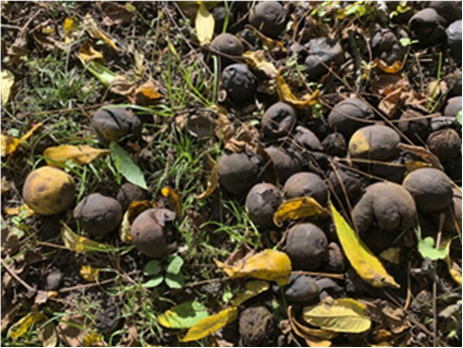
When a Walnut Falls

When a walnut falls, it is . . .
           A sure sign of the autumnal genesis.
           A probable dent in an unlucky car.
           A chore for neighbors whose lawn hosts its sire.

When a walnut falls, it can be . . .
           A hazard to the cyclist who dodges it on the shared path.
           An invitation to the boy who finds it.
           A meal to be stored by the industrious squirrel.

When I was a kid, we took five-gallon buckets into the woods to pick up the walnut harvest.  Dad then scattered our collection across the #3 limestone of the back drive where he parked his truck. Driving across the hulls daily freed the hard inner shells to later be picked up and cracked open, revealing a meaty snack.

When a walnut falls, it is . . .
           A portent of winter to come.
           A provision of nutrients in a fallow season.
           A promise of next generation sapling, tree, wood, furniture and trim.     

When a walnut falls, it is . . .
           An invitation to ponder.
           A sign to observe.
A contribution to consider.

When a walnut falls, it is . . .
           A prompt for a poem.
           A drumbeat in nature.
           A deposit from above.       

© Daniel M. Cash 2025


1 Comment

Filed under Poetry, Seasons

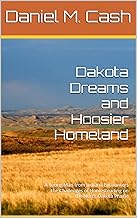
New Book Release: Dakota Dreams and Hoosier Homeland by Daniel M. Cash

My latest book, Dakota Dreams and Hoosier Homeland, a work of historical fiction, has been and is available in paperback and e-reader format on Amazon.com. You can listen to my podcast about the book, featuring the book’s Prologue read in my own voice, on my Substack page. You can also read the Prologue below.

Dakota Dreams and Hoosier Homeland is the story of Clyde and Anna Cash, my paternal grandparents, set in the year 1915 between the communities of Greencastle, Indiana and Arnegard, North Dakota. My grandad Clyde tried his hand at homesteading at about that time in history. And, while I do not know all the particulars to his story, I have researched enough to have created a story that may represent some of the challenges and opportunities he faced. Meanwhile, back home in Indiana, his girl Anna (my grandmother) was patiently, or maybe not so patiently, waiting for Clyde to come to senses and come home. It was fun to imagine their correspondence and decision making.

The Dakotas will always have an imprint on my life, not only because of my grandad’s legacy, but due to my own time there over 100 years later. Writing this book became a way for me to to not only tell part of Clyde and Anna’s story, but to reflect on my own.

Here’s a preview from The Prologue of
Dakota Dreams and Hoosier Homeland:

When Clyde awoke on that early autumn day, he sensed the smell of smoke in the air. By now he had been on the prairie long enough to have heard about the dangers of prairie fires. Following the alert his senses gave him, he quickly went outside to scan the horizon.  To the southwest he saw a plume of smoke rising from above the land. It was the Lucas Johansen place. Lightning from the early morning storm must have ignited the fire.

Clyde wasted no time. He quickly dressed, grabbed an old blanket from his home, stepped into his boots and put on his hat, then high tailed it down the two-track from his place to the Johansen’s.  He jogged more than walked the ½ mile to their farm and saw on his arrival that the fire lay south beyond the homestead and barn lot.

Thankfully, Lucas and his brothers had already harvested the wheat crop earlier in the season, but the fire was making it’s way through the wheat stubble, threatening to move into the portion of the farm where the buildings stood.

Clyde took his place alongside the others, Lucas and Mrs. Johansen; Karl and Hans; Magnus and Marit.  He dipped his blanket into the bucket of water that had been hauled out to the field and commenced to fight back the flames where there was a gap in the line. Soon he was joined by his neighbor and good friend, Thomas O’Brien, who had also seen and smelled the smoke, and come to help.

The danger of prairie fires was something that had been expressed to both Clyde and O’Brien upon their arrival in the region.  Sadie Svennson had been the first to school them on this phenomenon once when they had seen evidence of such a fire off in the distance from Arnegard.

The arid nature of the climate, prevalence of wind, ample availability of surface fuel and ignition caused by lightning from summer storms often came together as a perfect storm for this particular disaster.  Too many homesteaders had been driven to ruin by such a prairie fire in the past, meaning that everyone came to the fore when such an event sparked nearby.  You never knew if you, your family and your farm might be the next victim.

So, in the best sense of the tradition behind the name “Dakota”, you went to help your “friends”.  You became an “ally” on the prairie, looking to assist in any way you could to get the fire under control, or to at least protect the farmer’s home and farm buildings, livestock and equipment.

After a grueling couple of hours fighting back the flames, the crew working against the Lucas’ Johansen prairie fire got the upper hand.  Assisted by the decline of the wind and consummation of the available fuel, the fire began to play out.  The fact that Karl and Hans had taken their work horses and plowed firebreaks into the field was likely the ultimate difference between winning and losing that day.

Clyde was grateful he had been able to lend a hand. But the event gave him pause. Once again, he was mindful of just how difficult this life on the northern prairie could be. There were so many challenges that could arise – insects, fire, wind, storms, drought.  He knew with winter on the horizon that some of the most challenging days were still to come.

“Come to de house for a drink of vater, Clyde Cash”, called Mrs. Johansen. “Ve vant to thank ye for coming to our aid today.”

So, Clyde joined the others to quench his thirst.  Mrs. Johansen brought out some sour dough bread with jam, as well. And the soot covered homesteaders, from oldest to youngest paused to give thanks for God’s protection and deliverance that day.

This was Lucas’ Johansen’s prayer:

“Ve tank dee Lord God for die deliverance. Yee brought us friends and family to fight back de flames and save our home. Indeed, as your Good Book says, ‘de flame sal not consume you’.”

As he went back home to pick up the chores of the day on his own homestead, Clyde continued to marvel at his neighbor’s demeanor.  The devout Lutheran Norwegian was something of an enigma to Clyde. He could be gruff, blunt and even standoffish. But other times his true metal and character, including his faith, shone about as bright as anything Clyde had experienced. 

Thinking then of the others who were part of that morning’s fire fighting crew, Clyde smiled to himself about the diverse cast of characters he had met on the North Dakota prairie. He knew he had another story to write to Anna about in his next letter.

© Daniel M. Cash 2025

You can place your order for the paper back or e-book version of Dakota Dreams and Hoosier Homeland now.

For more information or to receive email notices about my writing you can subscribe to my blog or substack page.
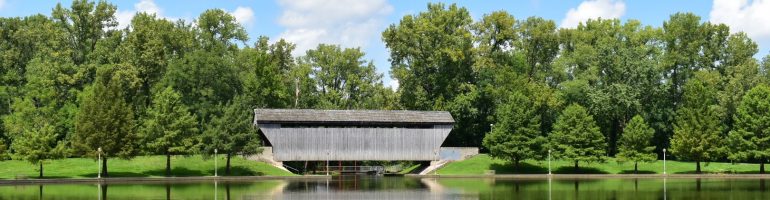
2 Comments

Filed under Christian Faith, Community, Family, Passageways, Uncategorized

Halt the Summer Postmortem!

The end of summer’s lifespan has been once again vastly overstated.  Do not write her obituary just yet.  As we move into this third full week of September, and the meteorological end of the summer season is in full view, she has arisen!

We can feel the brush of her high 80’s hot air and bask in the bake of her high noon sun. Sure, the color of the palate has changed – highlighting browns and yellows now, but where sprinklers sputter the grass is yet bright green and growing.

Hummers and Monarchs may be preparing for migration, and who can say about the geese of Canada?  Most of them are now year-round pests. Sunflowers are still blooming, as are zinnias; and sedums are coming into their own.  This can be true even as the coneflower and black-eyed-Susan have gone the way of the day lily and iris.

A bike ride in the countryside shows soybean fields more yellow than green, and some even a crisp brown. The exception being the second crop group that grows green yet – shadowing out it’s wheat stubble bed.  

Some of the early corn has already been picked. Birds flutter out of otherwise drying corn fields, brown from the bottom up, as I ride past. They seem to say, “leave me be while I catch a late summer nap.”

The sun will set a fraction of time earlier this evening, and the rise just a tad later come morn.  We may awaken to temps in the 50’s, but they will be short-lived, climbing higher by the hour, like summer herself who has made a comeback.

It’s a last week, maybe two, in which to remember vacation days, holidays, pool and beach days, or fishing at the pond.  It’s a “Minnesota goodbye” summer offers – first from the front room, then the foyer, out the door and onto the porch, and finally from the drive.  “Come again” we say, “when you can stay longer next time.”
© Daniel M. Cash 2025

#bikeridephotography #backyardphotography

Leave a comment

Filed under Cycling, Holy Days, Passageways, Seasons