
Abraham begat Isaac. . . . and Jesse begat David the king; and David the king begat Solomon of her that had been the wife of Urias . . . . and Jacob begat Joseph the husband of Mary, of whom was born Jesus, who is called Christ. (Matthew 1: 2, 6 & 16 KJV)
Singer song-writer Andrew Peterson has a song titled “Matthew’s Begats” that is part of his Christmas album Behold the Lamb of God. It’s a word salad of a song, filled with the names and lineage of Matthew 1 – a passage when read in the KJV that is filled with “begats”. “Begat” is an old English word that means to bring forth or bear. In Biblical use it is often associated with the role of a man who “begats” offspring, though of course said man could not produce without the equal, if not greater, participation of a woman. But in Bible times it was a man’s world, so Matthew’s “begats” is mostly about men – fourteen generations from Abraham to David, fourteen more generations from David to the Exile, and then (you guessed it) fourteen more from the Exile to Jesus.
In his gospel’s first sixteen verses we encounter names such as Phares and Zara, Aminadab and Salmon, Boaz and Obed, Jesse, Solomon, Rehoboam, Josaphat, Manasses, Amon and Jochonias, to call forth just a few. Mention is also made of Tamar, Ruth and “her who had been the wife of Urias” (Bathsheba), as well as Mary, the mother of Christ. Matthew 1:1-16 is probably not one of the more memorized or quoted passages found in the Gospels, but it is interesting. Without all that begetting, Jesus would not have been begotten, meaning no incarnation, no Messiah, no Christ, no Christmas. Translate that as no hope, no redemption, no restoration, no salvation, no re-creation, no eternity. It all began with the begats.
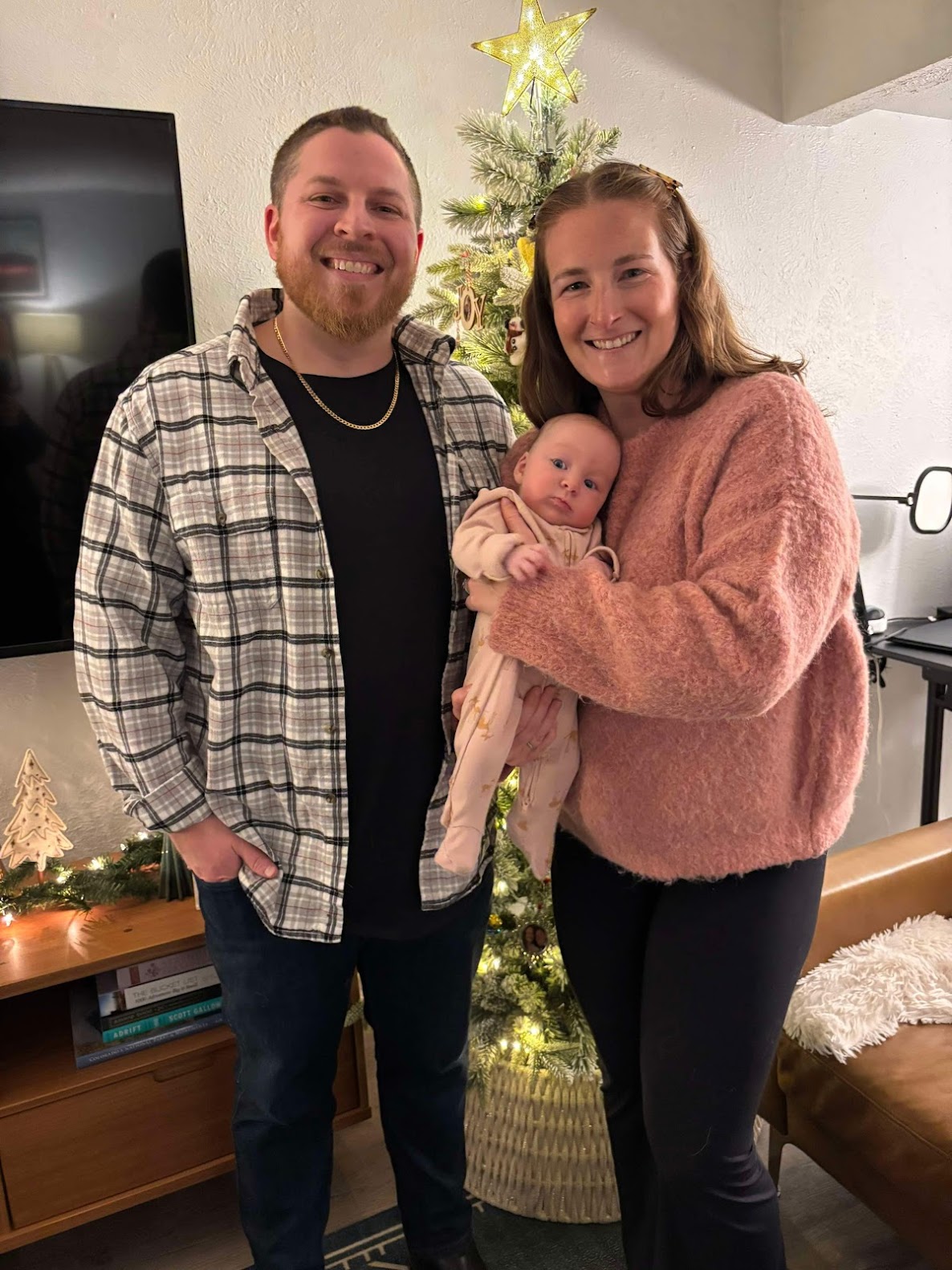
This passage, along with Peterson’s song, came to my mind over the past days as my wife and I had opportunity to spend a few days with our newest grandchild. Cora comes from her own unique line of begats. I’ll go back just a couple generations – Thomas Gene, with Ellen Joan, begat Daniel Martin who married, Lori Susan, begotten of Charles Lowell and Joan Jean; and together Dan & Lori begat Jacob Daniel, who together with his wife Olivia begat Cora. (This is to say nothing of the Ashby lineage side of things – filled with its own unique and noteworthy begats.)
When a baby is born that new life brings forth something of the generations of those who came before her. Of course this is true genetically. We ask, “Who does she look like? I see some of her mother, or her maternal grandfather”. Others may add, “there’s a Kline shape to her face, not unlike her Lolly’s”. But more than appearance or DNA there is story, heritage and tradition a newborn inherits for good, bad or in between. As the infant’s family, her grandparents, aunts and uncles and others greet and hold her, they may be cognizant of these generational contributors too. They may think how their mother or dad, Grandad or Grandma would have enjoyed seeing this little one, or knowing of her blessing in her parent’s life.
When Mary and Joseph took the infant Jesus to the Temple for dedication they were met by two older people, Anna and Simeon (see Luke 2:22ff) who were waiting in anticipation of seeing the Messiah. Upon their discovery they each offered a blessing upon the child Jesus, whom Simeon called “the consolation of Israel”. Can you imagine? This would be just one of a growing number of experiences Jesus’ parents took to heart, witnessing this recognition and hearing this blessing over their infant son.
It’s not hard for me to imagine, for as I held, snuggled and fed Cora I too offered my own prayers of blessing upon her life. It’s what you do with a babe in arms, especially if she or he is in your line of begats. You give thanks for the wonder of a new life. You adore the beauty and are in awe of a next generation, that reminds you of the prior generation when he was that size. You get caught up in the begats and how they continue to happen, and will continue to happen in the future.
Perhaps Matthew offers us the begats in such detail, over forty-two generations worth, so that we will connect our having been begotten to the Christ. For this is the story of incarnation, the Messiah’s birth, it’s about he who was begotten for you and I . . . and for Cora, and for whomever you are giving thanks for having been fortunate enough to have been associated with their begetting. It’s the gift of incarnation that connects all the generations, past, present and future, with the hope of a child born to us who is Christ the Lord.
Take a moment and read these lyrics from Matthew’s Begats as paraphrased by Peterson. Or, better yet, listen to his song:
Abraham had Isaac
Isaac, he had Jacob
Jacob, he had Judah and his kin
Then Perez and Zerah
Came from Judah’s woman, Tamar
Perez, he brought Hezron up
And then came
Aram, then Amminadab
Then Nahshon, who was then the dad of Salmon
Who with Rahab fathered Boaz
Ruth, she married Boaz who had Obed
Who had Jesse
Jesse, he had David who we know as king
David, he had Solomon by dead Uriah’s wife
Solomon, well you all know him
He had good old Rehoboam
Followed by Abijah who had Asa
Asa had Jehoshaphat had Joram had Uzziah
Who had Jotham then Ahaz then Hezekiah
Followed by Manasseh who had Amon
Who was a man
Who was father of a good boy named Josiah
Who grandfathered Jehoiachin
Who caused the Babylonian captivity
Because he was a liar
Then he had Shealtiel, who begat Zerubbabel
Who had Abiud who had Eliakim
Eliakim had Azor who had Zadok who had Akim
Akim was the father of Eliud then
He had Eleazar who had Matthan who had Jacob
Now, listen very closely
I don’t want to sing this twice
Jacob was the father of Joseph
The husband of Mary
The mother of Christ!
*Song lyrics as taken from “Behold the Lamb of God” album by Andrew Peterson, 2004.
Wishing you a blessed Advent season in anticipation of the next begat!
© Daniel M. Cash, 2024

 danielcash